
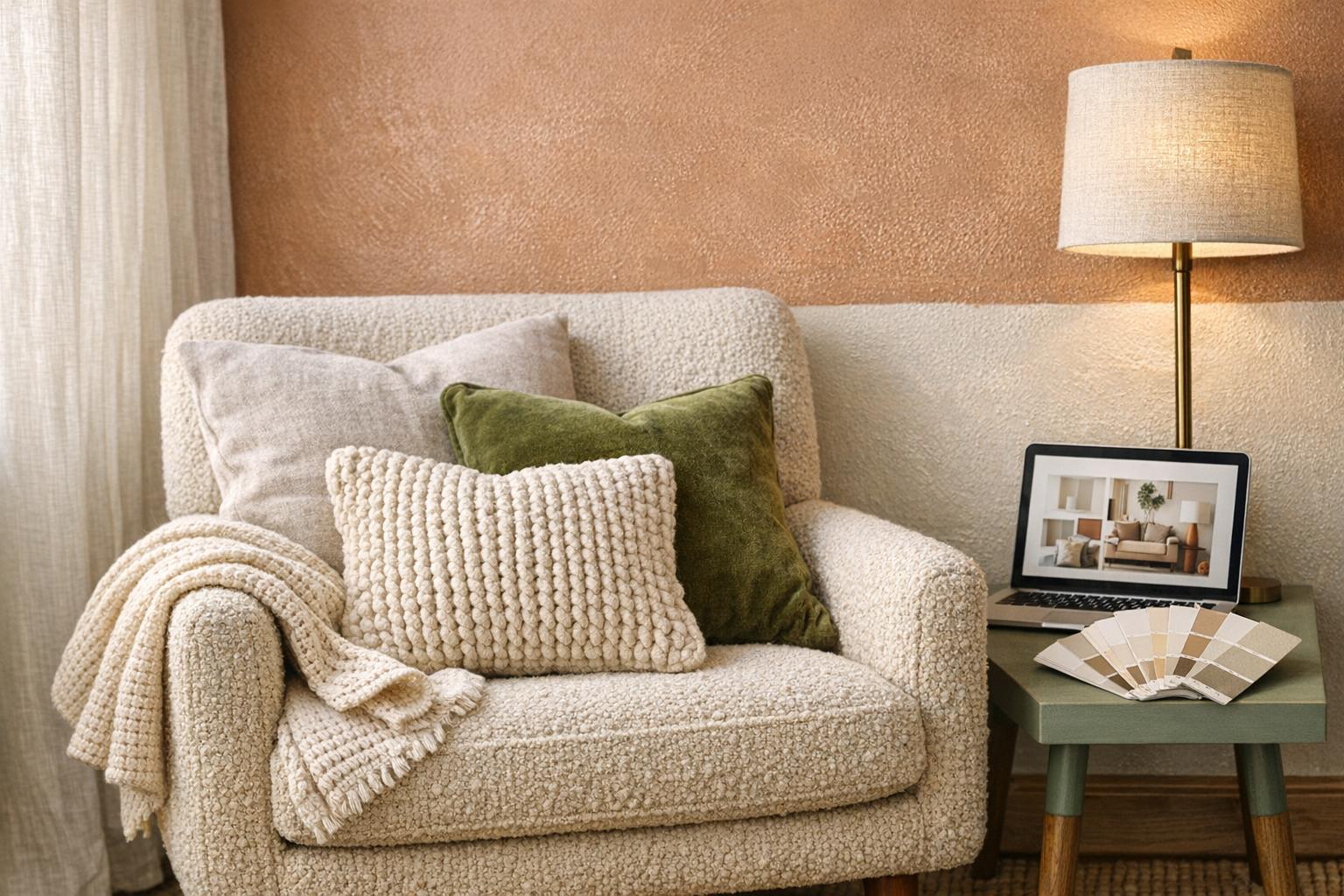
You don’t need a huge budget to make your home look stylish and intentional. By focusing on smart spending and resourceful strategies, you can create a well-designed space without overspending. Here’s how:
- Use interior design AI apps like InstantInterior AI to visualize designs and avoid costly mistakes, starting at $13.50/month.
- Paint walls for a cost-effective refresh - DIY for $115 or hire professionals for $400–$600.
- Shop second-hand for quality furniture at thrift stores or resale platforms, often saving 50% or more.
- DIY upholstery to revamp furniture for less, with dining chairs starting at $50 in materials.
- Look for clearance deals to save up to 70% on high-end furniture and decor.
- Rearrange your furniture to improve flow and aesthetics for free.
- Add textures with affordable accessories like throw pillows, blankets, or layered rugs.
Each of these tips helps you save money while achieving a polished, stylish home. Focus on planning, using what you already have, and making strategic purchases to stretch your budget.

Interior Design Budget Comparison: 7 Money-Saving Tips with Cost Breakdowns
10 Tips to Make Your Home Look Expensive on a Budget | Easy Ways to Add Luxury to Your Space
1. Use AI-Powered Virtual Interior Design Tools Like InstantInterior AI

If you're looking to design a space without breaking the bank, AI-powered tools like InstantInterior AI can help you save money while improving design precision.
Affordability
Hiring a traditional interior designer can cost anywhere from $3,000 to $15,000 per room. In contrast, InstantInterior AI offers a budget-friendly alternative, starting at just $13.50 per month (with annual billing) for 100 renders per month. This gives you access to unlimited redesign options at a fraction of the cost.
But the savings don't stop at fees. AI visualization helps avoid costly mistakes - like choosing the wrong furniture size or mismatched styles - which can add $500 to $2,000 per room. It also assists with comparison shopping, potentially cutting furniture and decor costs by 15% to 40% compared to designer-sourced items. All of this makes the design process more accessible and budget-friendly.
Ease of Implementation
You don’t need any prior design experience to use InstantInterior AI. Just upload a photo of your space taken in natural light from eye level, and describe the look you're going for (e.g., "modern minimalist with warm wood tones"). Within hours, the AI generates renderings, turning what used to take months into a quick and efficient process.
The tool keeps your room’s existing architecture, lighting, and perspective intact, altering only furniture, decor, and colors. You can also customize your prompts, like asking to "keep the hardwood floors" or specifying "no gray tones", to tailor the design to your preferences. Plus, the platform allows for unlimited iterations within your plan, so you can experiment with bold styles or unexpected combinations.
Impact on Aesthetics
InstantInterior AI incorporates design principles like color theory and spatial planning, ensuring functional yet visually appealing results. For example, it can help you visualize clearances (e.g., maintaining 30–36 inches of walking space) and test the 60/30/10 color rule to balance your room’s palette.
The platform also simplifies the daunting task of choosing paint colors. It narrows down dozens of options to a shortlist of 3 to 5, making it easier to pick physical samples that work with your room’s unique lighting. This approach helps avoid the disappointment of colors that look great on a screen but fall flat in real life.
Creative Potential
Whether you're drawn to Japandi, Industrial Loft, or another style, InstantInterior AI offers a wide range of presets to inspire you. You can generate multiple variations of a design to refine your vision further. Its furniture removal feature even lets you digitally declutter and virtually stage rooms, ensuring that every purchase is both functional and stylish.
Considering that major kitchen remodels are projected to hit a median spend of $55,000 in 2025, using AI visualization can help you make confident decisions and avoid costly regrets. By exploring ideas digitally first, you can achieve a space that feels both personal and well-designed.
2. Paint Walls, Ceilings, and Trim for Big Changes
Affordability
Painting is one of the most cost-effective ways to refresh your space. A DIY paint job for a standard room costs about $115, while hiring professionals could run you anywhere from $400 to $600. A gallon of consumer-grade interior paint typically costs $20 to $60, with premium options priced at $60–$100 or more. For a 12×12 ft room with 8 ft ceilings, you’ll need about 2–3 gallons per coat.
Want to save even more? Focus on smaller projects. Painting an accent wall, for example, requires just one or two gallons, costing around $30–$70, and can completely transform a room in just one day. For an even bigger statement, consider updating kitchen cabinets with trendy colors like navy or forest green. This upgrade can modernize your kitchen for under $150 - much cheaper than replacing cabinets entirely.
Ease of Implementation
The beauty of painting is its simplicity. You don’t need professional expertise to achieve great results, and the materials are affordable. Basic tools include a 2-inch angled sash brush ($7–$12), a roller with an extension pole, paint trays with liners, and drop cloths. Add lightweight spackle, a putty knife, a sanding block, and painter’s tape, and you’re all set.
"Paint is the least expensive material and has a low threshold for tools and skill but can create a big impact by just changing the color of a room."
– Casey Keasler, Founder and Design Director, Casework
Preparation is key. Start by cleaning surfaces with a degreaser and lightly sanding them to ensure the paint adheres properly. Test your chosen colors by painting 2×2 ft swatches on different walls and observing how they look in natural and artificial light throughout the day. Using a primer ($15–$40 per gallon) can reduce the number of topcoats needed, especially when switching from dark to light colors.
Impact on Aesthetics
The right paint choices can completely transform the look and feel of a room. For example, painting walls, ceilings, and moldings the same color - a technique called color drenching - creates a polished, high-end vibe without breaking the bank. Two-tone walls, with a darker, washable color on the lower half and a lighter shade above, can add depth and make a room feel either cozier or more open.
For small spaces, consider painting the ceiling a contrasting jewel tone to create a unique ambiance. Bold trim and molding colors, like black paired with white walls or hunter green against neutral tones, offer a striking, modern effect. Using matte finishes on walls helps mask imperfections and gives a rich appearance, while semi-gloss finishes on trim provide durability and a sleek contrast.
If you’re feeling adventurous, there’s even more you can do with paint.
Creative Potential
Paint opens up endless design possibilities. Techniques like glaze washes or ragging are budget-friendly ways to add texture and character to your walls. Even wood floors can get a stylish makeover - painting them with classic patterns like a checkerboard design is far cheaper than refinishing or replacing them.
"Color drenching is my favorite paint upgrade to elevate any space. When a room is painted all one color, it instantly adds an element of sophistication."
– Jessica Nicastro, Interior Designer
To save money, shop for paint during major sales events like Memorial Day, Labor Day, or Black Friday, where you can often save $15–$20 per gallon. Take care of your tools to extend their lifespan - clean high-quality brushes immediately after use, and try the "fridge hack." Wrap wet brushes or rollers in plastic wrap and store them in the refrigerator to keep them fresh for breaks or overnight.
3. Shop Second-Hand Furniture and Thrift Stores
Continuing the journey of designing on a budget, second-hand shopping offers a way to achieve stylish interiors without breaking the bank.
Affordability
Buying second-hand furniture is a smart way to save money compared to purchasing new items. Since 2015, sales of resale home goods have jumped by 63%, showing how many people are turning to thrift stores and resale platforms for deals. For instance, you could snag a set of eight solid oak vintage dining chairs for around $120 at a thrift store, while a West Elm Rowan Chair might cost $492 on a resale site - still much cheaper than retail. Mid-century modern ceramic lamps might sell for $275, but smaller pieces can start as low as $4, especially if you're willing to upcycle.
Vintage furniture often boasts solid craftsmanship, with materials like oak, walnut, and mahogany, and features such as dovetail joinery - qualities that are far more expensive in today’s market.
"Older dressers are often made of solid wood with dovetail joints, unlike many modern ones that use particleboard."
– Julie Beuerlein, Principal Designer, JKB Home Design
Ease of Implementation
Finding great second-hand pieces takes a bit of know-how. Look for construction details like dovetail, mortise-and-tenon, or doweled joints rather than glued or stapled ones. Use a "wiggle test" to check for stability and a "sniff test" to spot odors like smoke or mildew on upholstered items. Solid wood furniture should feel heavy and substantial. For upholstered pieces, focus on hardwood frames with hand-tied springs - fabric can always be replaced, but a weak frame is a dealbreaker.
Timing can also make a difference. Thrift stores often restock on Mondays or Tuesdays after weekend donations, so plan your visits accordingly. Bring a tape measure and note your space dimensions to avoid buying something that doesn’t fit.
To identify valuable finds, use tools like Google Lens to research an item’s origin, designer, or market value right in the store. Keep an eye out for well-known vintage brands like Henredon, Drexel Heritage, Lexington, and Thomasville. For metal hardware, a magnet can help - solid brass won’t stick, while plated metals will.
"The more you can train your eye to notice high-end brands, the more gems you will find!"
– Paige Kontrafouris, Vintage Seller and Content Creator
Once you’ve secured quality pieces, they can add depth and personality to your home.
Impact on Aesthetics
Second-hand furniture brings a sense of character and individuality that mass-produced items often lack. Mixing vintage finds with modern decor creates a layered, "collected" look that feels personal and unique, rather than like something straight out of a showroom. This approach aligns perfectly with the goal of achieving stylish interiors on a budget. Statement pieces like vintage chandeliers, ornate mirrors, or hand-carved furniture can often be found at a fraction of the cost of luxury items.
"Mixing old-world pieces with new, custom-designed furniture is a fantastic way to create a unique and inviting space."
– Bridget Cooper, Principal Designer, Bridget Cooper Design
Creative Potential
Second-hand finds aren’t just about aesthetics - they’re also a playground for creativity. Swapping out outdated hardware with modern knobs or handles can instantly refresh a dresser or nightstand. You can also repurpose items for new uses: turn an old dresser into a bathroom vanity, use a mid-century credenza as a TV console, or convert an antique sewing machine into an entry table. Adding peel-and-stick wallpaper to the back of bookshelves or the inside of drawers can give a pop of color or pattern.
"One of my favorite ways to transform a thrift store find is to swap out the hardware - it's amazing how a set of unique knobs can completely elevate a piece."
– Alex Spielman, Interior Designer and Founder, The Little Things
Smaller items like stools, side tables, and lamps are perfect for quick makeovers. A simple refinishing job or hardware update can make them look brand-new. For a trendy, artisan vibe, apply joint compound to inexpensive vases or lamps to create a textured pottery effect. Even everyday items can find creative new purposes - vintage vases can hold kitchen utensils, and antique egg cups make charming jewelry holders. These small transformations show how thoughtful design doesn’t have to come with a hefty price tag.
4. Update Furniture with DIY Projects and Upholstery
If you're looking for a budget-friendly way to refresh your home, DIY upholstery projects can breathe new life into your furniture while keeping costs low. This hands-on approach not only saves money but also allows you to add a personal touch to your space.
Affordability
One of the biggest perks of DIY upholstery is the cost savings. Hiring a professional upholsterer can cost anywhere from $40 to $100 per hour. For example, reupholstering a dining chair on your own might cost between $50 and $200 for materials, compared to $150 to $600 if you hire a pro [40,46]. Similarly, a DIY sofa project could range from $280 to $1,150 in materials, while professional services might set you back $600 to $4,000 [43,44].
The cost of upholstery fabric is another factor to consider. Fabric typically runs between $20 and $70 per yard, and a large sofa may require 16 to 20 yards of material [40,44]. By handling the labor yourself, you can significantly reduce the overall expense.
Ease of Implementation
If you're new to upholstery, dining chairs with wooden frames are a great starting point. Their seats are easy to remove and recover. Before diving in, gather these essential tools:
- Heavy-duty staple gun
- Staple remover or needle-nose pliers
- Fabric scissors
- Measuring tape
- Flathead screwdriver
- Upholstery-weight fabric
- High-density foam (1–2 inches thick)
- Polyester batting
- Heavy-duty staples (1/4" to 3/8")
To make the process smoother, use the old fabric as a template. Carefully remove it, label each piece, and take detailed photos of how it was originally attached. These steps will help guide you through cutting and stapling the new fabric. It's also wise to buy 15–20% more fabric than you think you'll need - this extra material can save the day if you make a mistake or need to match patterns.
For an even simpler approach, consider no-sew methods. You can use fabric glue for trim, upholstery twist pins to secure fabric, or staple fabric directly to the underside of cushions. If the existing fabric is still in decent shape, try layering the new fabric over it using the "no-strip" method [43,46]. These techniques make larger projects, like reupholstering a sofa, much more approachable - even for beginners.
Impact on Aesthetics
Reupholstery doesn't just fix worn-out furniture - it can completely transform it. Swapping out outdated or damaged fabrics for sleek, modern designs can elevate the look of any room.
"Well done reupholstery can completely transform your space." – Diane Montgomery, Upholsteress
For furniture in high-traffic areas, like sofas or dining chairs, choose durable fabrics with a Wyzenbeek rating of at least 30,000. Residential upholstery fabrics typically fall between 20,000 and 50,000 double rubs, so selecting a higher rating ensures your pieces will stand up to daily use [46,47].
Creative Potential
DIY upholstery gives you the freedom to design furniture that fits your style perfectly. Whether you want to match your current décor, experiment with bold patterns, or create something entirely custom, the possibilities are endless.
"Upholstery gives you the opportunity to make a piece exactly what you want it to be." – Diane Montgomery, Upholsteress
If you're just starting out, try reupholstering smaller items like ottomans or dining chairs to build your confidence [40,47]. For larger projects, focus on pieces with solid hardwood frames, 8-way hand-tied springs, or sentimental value - they're worth the effort [43,46]. On the other hand, avoid reupholstering furniture made of particle board or with cracked frames, as these are less likely to hold up over time [43,46].
"A good rule of thumb is that if you'd be sad to see that piece go, give it a second life with new upholstery." – Michael Tavano, Interior Designer
sbb-itb-4214aae
5. Find Clearance Sales and Sample Outlet Deals
Clearance sales are a fantastic way to design a stylish home without breaking the bank, offering significant savings on high-quality furniture and decor.
Affordability
Clearance and sample outlet deals can slash furniture costs by 20%–70%, depending on the timing and the item. For instance, in March 2026, Wayfair listed a microfiber sheet set for $22.99 (originally $107.99, saving 78%), West Elm offered the Haven 2-Piece Bumper Chaise Sectional for $2,398.40 (down from $2,998), and Room & Board discounted a 48-inch Reeves mirror from $999.00 to $499.99 - a 50% reduction. Retailers like Ethan Allen, Room & Board, West Elm, and Wayfair often have dedicated clearance sections featuring floor samples, discontinued items, and open-box returns. Floor samples, in particular, are usually discounted by 30%–50% because they are sold "as is" and require immediate pickup. Online marketplaces also offer "Open Box" and "Closeout" deals on inspected returns and discontinued products.
"We're making room for new styles, which makes now a great time to save. These furniture clearance sale deals are priced to move - from our Design Centers and distribution centers right to your home."
– Ethan Allen
These deep discounts make clearance events a great opportunity to snag high-end pieces at a fraction of their original cost.
Ease of Implementation
Shopping clearance deals is simple, but timing is everything. Most furniture stores update their showrooms twice yearly - typically in January/February and August/September - making these ideal times to shop. Indoor furniture tends to be cheapest in January/February and July/August, while outdoor furniture often sees price drops of 40%–60% between August and October. Online shoppers can use filters like "Open Box" or "Closeout" to find deals quickly, while in-store shoppers should ask about "scratch-and-dent" sections for even bigger discounts. Same-day pickup can sometimes unlock additional savings. Just remember to measure your space and doorways before purchasing, as clearance items are usually final sale. Inspect floor models carefully - cosmetic flaws can often be fixed with a little DIY effort, but structural issues are harder to address.
Impact on Aesthetics
Clearance shopping doesn’t mean settling for outdated designs. High-end retailers often mark down floor samples and discontinued lines to make room for new inventory, meaning you can score trendy, stylish pieces at a fraction of the cost. For example, in January 2026, Wayfair Outlet featured a Wrought Studio Arnya Minimore Modern Sofa with four matching toss pillows for $459, originally priced at $1,400. To maximize the impact, spend your clearance budget on statement pieces like oversized rugs, sectional sofas, or large coffee tables. These anchor pieces can dramatically elevate your room’s design. Tools like Google Lens can also help you locate similar high-end items at lower prices by identifying them through photos.
"Go buy the big couch, buy the big rug, buy the coffee table that's oversized because what people don't realize is that scale makes your space feel bigger."
– Bilal Rehman, Luxury Interior Designer, Bilal Rehman Studio
Creative Potential
Clearance finds are also perfect for adding a personal touch. A solid wood piece with good "bones" can be transformed with a fresh coat of paint or new upholstery, giving it a completely new look. Look for quality features like dovetail joints, smooth-gliding drawers, and sturdy construction - heavier pieces usually indicate better craftsmanship. Small clearance items like cabinet knobs and pulls, often priced between $1.99 and $5.00, can refresh older furniture affordably. You can even bundle multiple clearance items to negotiate better prices or reduce delivery fees, making your budget go further while embracing a more sustainable approach to home design.
"A good purchase price helps offset the cost of the fabric and reupholstery labor."
– Becky Carbone, Founder of Becky Carbone Interiors
6. Rearrange and Edit Your Existing Furniture and Decor
Transforming a room doesn’t always require a big budget. By simply repositioning furniture and refining your decor, you can completely change the flow and feel of a space - without spending a dime.
Affordability
This approach is entirely free. You’re working with what you already own, focusing on rearranging furniture and clearing out unnecessary items. The only investment here is your time - typically about 2 to 4 hours.
Ease of Implementation
Start by clearing out small decor items, lamps, and accessories. This helps you see the room’s layout more clearly, without distractions. Next, identify a focal point, such as a fireplace, a large window, or a piece of statement art. Arrange your furniture to highlight this anchor, keeping at least 3 feet of walking space around major pieces. For a fresh look, try "floating" your furniture - pull sofas and chairs 12 to 18 inches away from the walls to create cozy seating areas and give the room a more open feel [64, 65]. Leave 15 to 18 inches between the sofa and coffee table to ensure functionality.
You can also switch furniture between rooms for a quick refresh. For example, move an accent chair or side table to a new spot to create a fresh vibe. Consider angling furniture toward the focal point instead of lining everything against the walls - it adds visual interest. If you’re moving heavy furniture, use felt pads to protect your floors. These small adjustments can set the stage for further creative touches.
Impact on Aesthetics
Removing about 30% of items from open shelves can make a room feel cleaner and more intentional [3, 19]. In smaller spaces, focus on a few larger pieces - like an oversized rug or a substantial sofa - to create a more cohesive and less cluttered look.
"When it comes to a room refresh on a tight timeline, the key is in decluttering. It's surprising how much of a difference a good tidy-up and reorganization can make."
– Kathy Kuo, Interior Designer, Founder and CEO of Kathy Kuo Home
Take a step back and view the room from the doorway. Test different seating arrangements to find a layout that feels balanced and inviting. Thoughtful furniture placement can even define specific zones for activities like reading, working, or socializing - especially in multi-purpose rooms. These small shifts not only improve the room’s flow but also set the stage for experimenting with new decor ideas.
Creative Potential
Rearranging your furniture is like giving your space a creative makeover. Try mixing things up by alternating vertical and horizontal book stacks on your shelves or color-coding book spines for a fresh visual effect. You could also create distinct areas, such as a cozy reading nook by a window, just by repositioning what you already have [3, 70]. It’s all about seeing your space in a new way and making small tweaks that deliver big results.
7. Add Textures with Affordable Accessories and Textiles
After rearranging furniture and tackling DIY projects, adding texture is an easy way to elevate your interior design without spending a fortune.
Affordability
Creating texture in your home doesn’t have to be expensive. Throw pillows, curtains, and blankets typically range from $10 to $60, making them budget-friendly options. Small details like jute rugs, wicker baskets, or even fresh branches can add natural texture for little to no cost. If you’re feeling crafty, DIY wall art or textured decor pieces can be made for as little as $5 to $50.
Ease of Implementation
Switching out textiles is one of the simplest ways to refresh a room. Combine materials like linen, velvet, faux fur, and cotton in your throw pillows for an instant upgrade. Layering rugs is another trick - place a patterned area rug over a larger, affordable jute rug to create depth without splurging on a high-priced piece. For curtains, add decorative trim to basic panels or layer sheer curtains with heavier drapes for a polished look. You can also reupholster dining chairs or bench seats with clearance fabric and a staple gun for a quick, custom touch.
"Small details can make a big impact without breaking the bank. It's a quick DIY upgrade that gives your furniture a high-end, custom feel in just minutes."
– Siobhan Borland-Alvarez, DIY Expert
Impact on Aesthetics
Texture is what brings a room to life. Combining contrasting materials - like smooth leather with soft velvet or natural wood with chunky knits - adds depth and sophistication. Follow the "Rule of Three" by grouping decor items in odd numbers and mixing heights and textures for visually engaging displays. Even simple touches, like filling a bowl with fresh lemons or artichokes, can add a pop of color and organic texture to your kitchen.
"When texture is overlooked, a room can end up feeling flat or lifeless, like a cake without frosting."
– Steven Graffam, Interior Designer, Stivale Graffam Home
Creative Potential
Get creative with thrift store finds - frame vintage textiles or scarves as one-of-a-kind wall art. Wicker baskets can double as both storage and stylish accents. Look for deals on platforms like Amazon or at stores like Target and H&M Home, especially during end-of-season sales, to snag heavy knit throws or velvet accents at a discount. For a custom wall finish, try using a sponge and paint to create texture for far less than the cost of wallpaper. These small, textural changes tie into the larger goal of designing a cohesive and stylish space on a budget.
Conclusion
You don’t need a huge budget to give your home a stylish, updated look. By combining AI-powered visualization tools like InstantInterior AI with practical strategies like painting, thrift shopping, and DIY projects, you can create a space that feels polished and cohesive. The trick lies in being thoughtful about where to splurge and where to save.
Focus on proven design principles - invest in a few quality pieces, use the 60/30/10 color rule to balance your palette, and incorporate layered lighting to enhance affordable finds. These strategies help pull everything together into a space that feels intentional and well-designed.
"The key is being intentional. Affordable should never mean disposable."
– Alvin Wayne, Interior Designer
Before buying anything new, take inventory of what you already own. Rearranging furniture or swapping accessories between rooms can completely refresh your space - without costing a dime. When you do shop, make sure to measure carefully. Properly scaled furniture prevents the cramped or mismatched look that can make even new pieces feel out of place.
Planning ahead is essential to avoid costly mistakes, like furniture that doesn’t fit or paint colors that require a second round. With creativity, resourcefulness, and smart spending, you can achieve the designer-inspired home you’ve been dreaming of - all without overspending.
FAQs
What updates create the biggest visual impact for the least money?
If you're looking to freshen up your space without breaking the bank, there are plenty of affordable options that can make a big difference. Consider hunting for vintage or second-hand treasures at thrift stores, estate sales, or online marketplaces. These spots are goldmines for finding one-of-a-kind, budget-friendly furniture and decor.
Feeling creative? Try a DIY project like crafting your own wallpaper using paint and stencils - a fun way to add personality to your walls. Or, focus on smaller updates like adding artwork, textiles, or decorative accents. Even simple changes, like rearranging your furniture or introducing a few standout pieces, can completely transform a room without stretching your budget.
How do I avoid buying furniture that’s the wrong size for my room?
Before buying furniture, take the time to measure your space thoroughly - including doorways and hallways - to avoid any sizing mishaps. Pay attention to the proportion and scale of each piece in relation to the room. This ensures the layout feels balanced and inviting. Instead of sticking to matching sets, try combining different styles and materials. This approach not only helps you find pieces that fit well but also adds character and depth to your overall design.
What’s the easiest DIY project for a beginner to start with?
Creating a gallery wall with affordable prints, like artwork or personal photos, is an excellent DIY project for beginners. It's easy to put together, won’t break the bank, and brings a personalized charm to your home.