
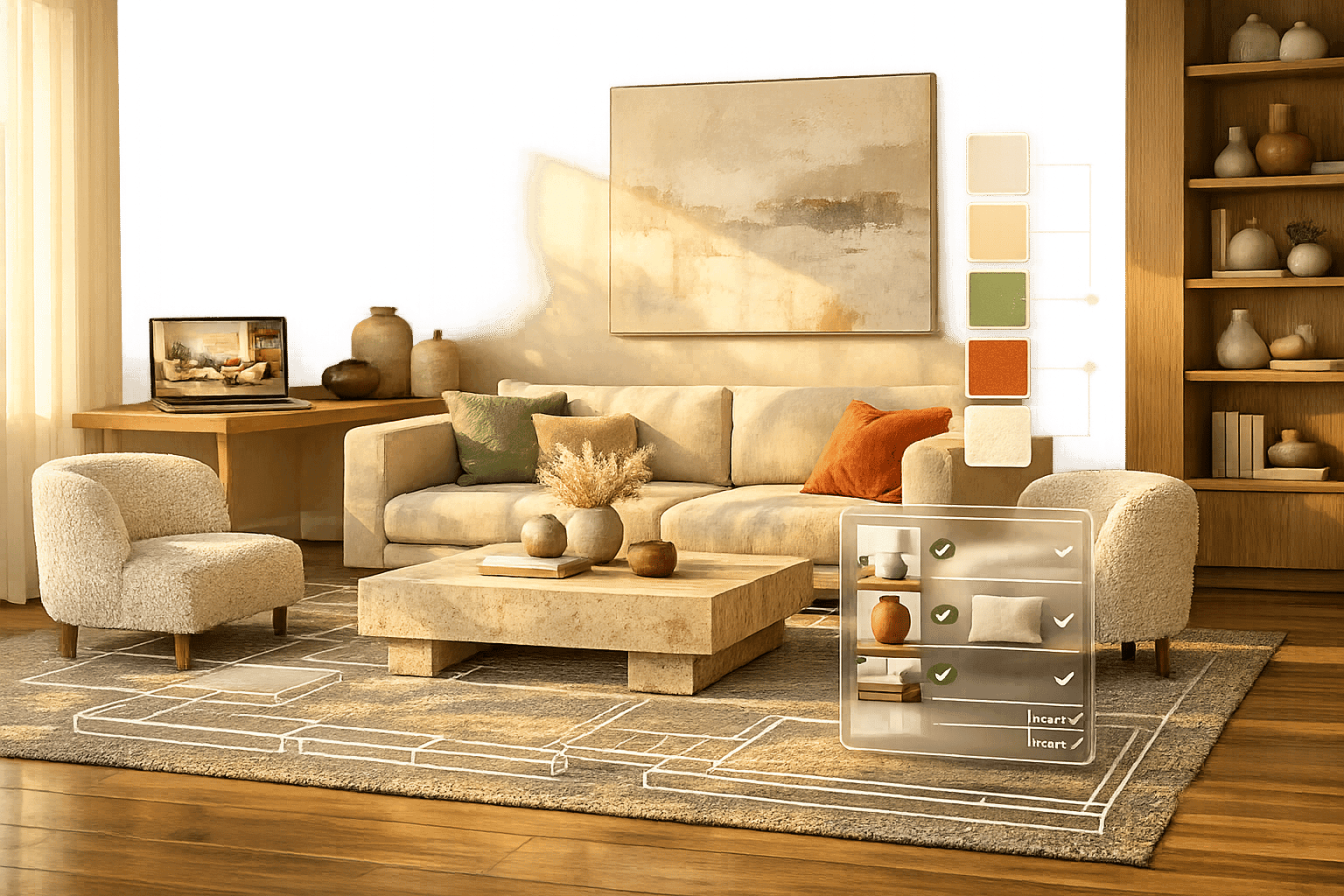
The world of interior design is evolving, and artificial intelligence (AI) is at the heart of this transformation. For professionals looking to enhance efficiency, boost creativity, and simplify client engagements, AI offers groundbreaking possibilities. In a recent workshop led by interior designer Sarah Admin, a clear roadmap for successfully integrating AI into interior design practices was laid out. Whether you're a homeowner, designer, architect, or real estate agent, Sarah's insights highlight how AI tools like ChatGPT can address challenges such as time constraints, high costs, and uncertainty about design outcomes.
This article explores the key takeaways from Sarah’s presentation and provides actionable tips to help you leverage AI for market research, social media strategies, client conversations, and design processes. Let’s dive in.
The Four Pillars of AI in Interior Design
Sarah Admin structures her approach to AI around four key applications that target common pain points for interior designers. Here's a breakdown:
1. Using AI for Business Research
Staying informed about industry trends, consumer needs, and pricing is critical for scaling any design business. Traditionally, such research would involve hours of manual effort, but AI tools like ChatGPT can now streamline this process.
- Market Trends: AI can guide designers in identifying profitable niches. For example, you could ask ChatGPT, "What are the current design trends for residential renovations in urban areas?" and receive tailored insights based on location and industry data.
- Cost Insights: AI helps estimate project budgets. If a client wants a bathroom renovation, a designer can input specifics (e.g., "master bathroom with a stand-up shower, separate tub, his-and-hers sinks") and get a breakdown of budget-friendly, mid-range, and luxury costs.
- Staying Competitive: AI can provide summaries of design events or trade shows, even if you didn’t attend. For instance, asking ChatGPT for the latest innovations from a major industry event like the Interior Design Show can keep you updated without physically being there.
2. Crafting a Social Media Strategy with AI
An effective social media presence is essential for attracting clients, but curating content can be time-consuming. AI simplifies this process by generating content ideas tailored to your business goals.
- For Beginners: New designers can use AI to create foundational Instagram posts. For example, prompts like "Create a social media content plan for an interior designer without a portfolio" can yield ideas like sharing design tips, curating inspiration boards, or showcasing sample materials.
- For Experienced Designers: AI can help streamline content creation with minimal effort. Sarah shared how she used ChatGPT to revitalize her Instagram after a break, increasing her post engagement by focusing on value-driven, short-form videos.
- Staying Relevant: AI also helps monitor algorithm changes and trends. Designers can ask, "What types of posts perform best on Instagram in 2026?" to ensure their strategy aligns with platform updates.
3. Practicing Client Conversations with AI
One of the most overlooked applications of AI is its ability to simulate client interactions. ChatGPT can act as both an advisor and a practice partner, helping designers refine their communication skills.
- Role-Playing Scenarios: AI can simulate difficult client conversations. For instance, a designer can ask ChatGPT to act as a client asking for discounts. Practicing responses with AI helps foster confidence in negotiations.
- Feedback on Communication Style: After role-playing, ChatGPT can offer critiques on tone and clarity, ensuring that designers sound professional and persuasive.
- Handling Challenging Objections: Prompts like "Help me respond to a client who thinks interior design services are too expensive" can prepare designers to highlight the value of their services without over-explaining or underpricing themselves.
4. Streamlining Design Processes with AI
AI has made strides in rendering technology, saving designers significant time in creating realistic visualizations for clients. Additionally, it enhances efficiency in sourcing and conceptualization.
- 3D Rendering: Sarah demonstrated how AI can transform mood boards into lifelike 3D renders. By inputting a clear prompt and specifying details like "Do not change any elements", AI tools can generate realistic room designs in seconds. This eliminates the need for time-intensive manual rendering.
- Sourcing Products: Designers can upload client inspiration images into ChatGPT and request help finding similar products. For example, when a client requested a floral mural, Sarah used AI to locate multiple options from Canadian retailers, saving hours of manual searching.
- Personalization: AI ensures that designs remain tailored to the client’s preferences. For any discrepancies (e.g., AI adding a lamp that wasn’t in the original design), designers can revise and refine results with specific instructions.
sbb-itb-4214aae
Key Takeaways
- Streamline Research: Use AI for market trend analysis, pricing insights, and event summaries to stay competitive and informed.
- Enhance Client Confidence: Practice difficult conversations and sales pitches with AI, gaining valuable feedback to improve your approach.
- Boost Social Media Presence: Rely on AI to generate engaging content ideas that align with evolving platform trends.
- Simplify Rendering: Transform mood boards into realistic 3D designs quickly by leveraging AI tools.
- Efficient Product Sourcing: Save time by uploading inspiration images and letting AI identify similar products from retailers.
- Focus on Quality Over Frequency: Short-form, value-driven content performs best on platforms like Instagram.
- Create Clear Prompts: The more specific your AI instructions are, the more accurate and useful your results will be.
- Leverage AI for Customization: Tailor AI outputs to client needs, whether for budgeting or design aesthetics.
Conclusion
AI is revolutionizing the way interior designers work, making their lives easier while enhancing the client experience. From research and social media to client communication and rendering, the potential applications are vast. By incorporating AI into your workflow, you can save time, reduce uncertainty, and focus more on creativity and client satisfaction.
As Sarah Admin proves, the key to success is experimentation. Start small, refine your prompts, and identify the areas where AI can make the biggest impact in your business. Whether you're a seasoned professional or just starting out, AI tools like ChatGPT can be your trusted partner in transforming challenges into opportunities.
Source: "How Interior Designers Can Use AI to Market, Sell, and Design Faster" - DesignFiles.co, YouTube, Feb 19, 2026 - https://www.youtube.com/watch?v=JRtwe_LO1XY