
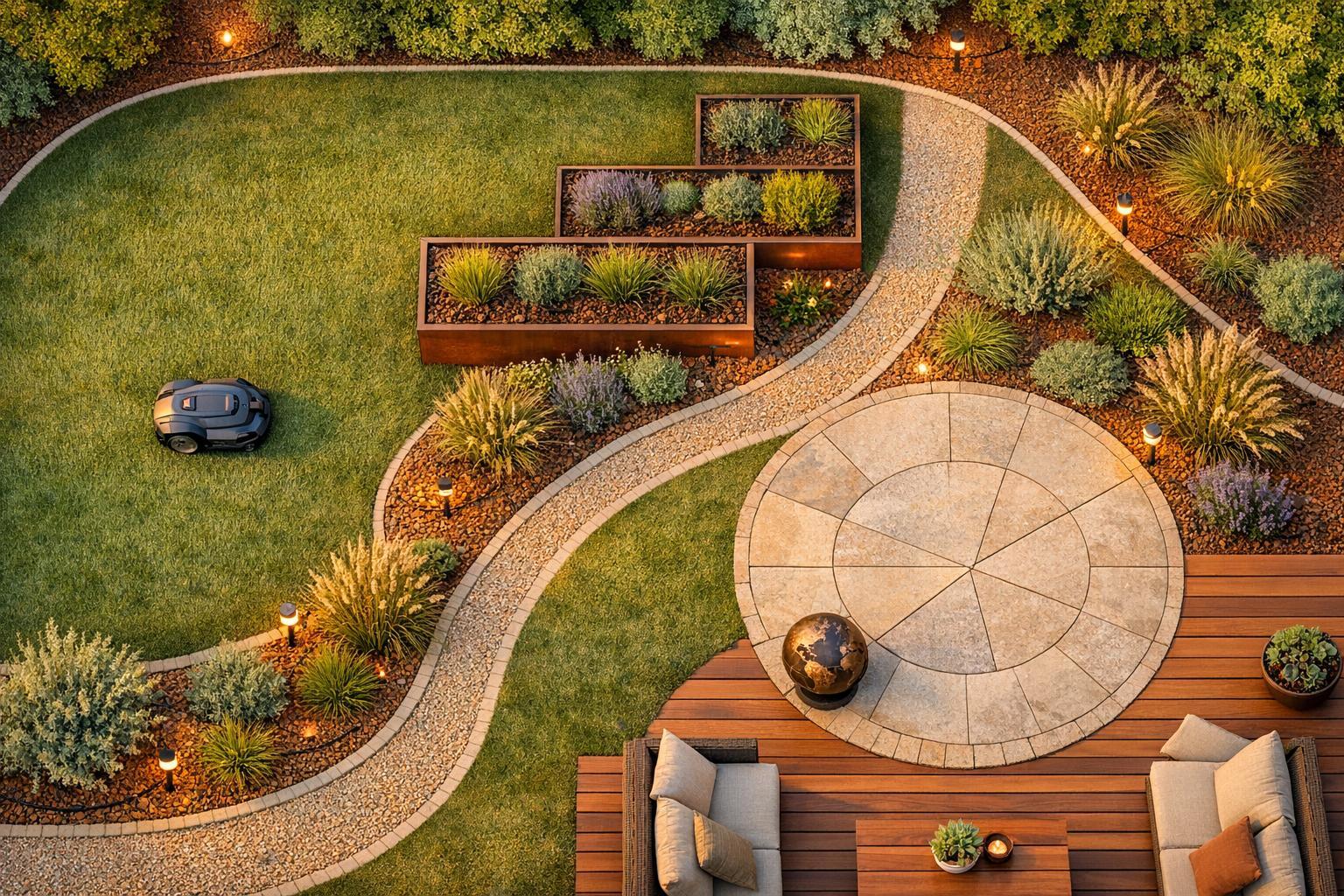
Landscaping in 2026 is big business. Here's what you need to know:
- Global Market Value: Landscaping services are projected to reach $741.53 billion globally in 2026, with the U.S. contributing $200 billion annually.
- Cost Insights: Homeowners spend between $3,300 and $13,200 on average for landscaping projects, with monthly maintenance averaging $252. High-end projects can exceed $40,000.
- Return on Investment (ROI): Landscaping can boost property value by up to 15%. Lawn care alone offers a 217% ROI.
- Industry Growth: The U.S. market grew 14.2% year-over-year from 2025 to 2026, with a projected CAGR of 5.09% through 2034.
- Trends: Popular features include patios, fire pits, and smart irrigation systems. Eco-friendly practices are driving demand, especially in drought-prone areas.
The landscaping industry is evolving with technology and shifting consumer preferences, creating opportunities for homeowners and businesses alike.

Landscaping Industry Statistics 2026: Market Size, Costs & ROI Overview
Landscaping Market Size Statistics
The landscaping industry in the U.S. demonstrates strong financial performance and promising growth trends. As of 2026, the U.S. landscaping market generates approximately $200 billion in annual revenue, solidifying its position as a global leader. North America accounts for about 36% of the global market share, with the U.S. leading the charge.
US Market Size and Global Comparisons
The U.S. market has seen impressive growth, increasing from $156.6 billion in 2025 to an estimated $200 billion in 2026. This marks a year-over-year growth rate of 14.2%. On a global scale, the landscaping services market is projected to reach $741.53 billion in 2026, up from $668.97 billion in 2025.
Commercial landscaping dominates the U.S. market, accounting for 58.7% of total revenue, while maintenance services - such as mowing, trimming, and pest control - make up 52.2% of the market share. Geographically, the Southern U.S. leads with a 37.8% share, driven by its warm climate and increasing residential development.
Growth Rate and Future Projections
Looking ahead, the U.S. landscaping market is expected to grow at a compound annual growth rate (CAGR) of 5.09% from 2026 to 2034, reaching $248.2 billion. Some forecasts suggest it could hit $255.74 billion by 2031. Globally, the landscaping services market is predicted to expand to $1.12 trillion by 2030, with a CAGR of 10.9%.
Key drivers of this growth include urban green space initiatives, increased residential investments, and a shift toward sustainable landscaping practices. The urbanization trend is significant - by 2050, 89% of the U.S. population is expected to live in cities, fueling demand for green infrastructure and beautification projects.
This growth underscores the need for a larger workforce and operational flexibility, topics explored further in the next section.
Employment and Business Data
The landscaping industry is a vital contributor to the U.S. economy, employing approximately 1.5 million people across 726,000 businesses nationwide. The number of landscaping businesses grew by 4.3% year-over-year, reaching 726,565 in 2025. The market remains highly fragmented, with the top five companies holding only a small share, leaving room for local and independent businesses to thrive.
However, staffing shortages remain a challenge, as 51% of businesses reported difficulties in hiring during 2025. To address this, many companies have diversified their services, offering year-round options like snow removal and holiday lighting. On average, net profits in the sector range from 10% to 14%, with labor costs accounting for 30%–50% of revenue.
sbb-itb-4214aae
Landscaping Cost Statistics
Understanding landscaping costs is key for homeowners and businesses looking to plan their outdoor improvement budgets. By 2026, homeowners can expect most projects to fall between $3,300 and $13,200, while high-end renovations may surpass $40,000.
The price per square foot ranges from $4.50 to $17, influenced by factors like project complexity and local conditions. Labor is a major expense, with mid-level companies typically charging between $70 and $90 per man-hour.
For monthly maintenance, the national average is $252, with costs for residential properties typically ranging from $133 to $370. Rising labor and material costs have driven landscaping service prices up by about 10% annually. Hardscaping elements, such as patios and retaining walls, are among the most expensive due to their material and labor demands. These figures set the stage for a closer look at how costs vary between residential and commercial projects, as well as across different regions.
Average Project Costs
Breaking down landscaping expenses by project type shows notable cost differences. Here are some examples:
- Garden beds: $1,200–$2,800
- Lawns: $2,000–$4,500
- Irrigation systems: $3,000–$8,000
- Patios or walkways: $3,500–$7,000
- Water features: $5,000–$12,000
| Project Type | Typical Cost Range |
|---|---|
| Garden Bed Installation | $1,200 – $2,800 |
| Lawn Installation | $2,000 – $4,500 |
| Irrigation System Installation | $3,000 – $8,000 |
| Patio or Walkway Construction | $3,500 – $7,000 |
| Retaining Wall Construction | $4,000 – $9,000 |
| Water Feature Installation | $5,000 – $12,000 |
Residential vs. Commercial Costs
Residential and commercial landscaping projects come with distinct priorities and budgets. Residential landscaping represents about 61% of the market, while commercial work generates roughly 58.7% of total revenue. Residential projects often focus on aesthetic appeal, while commercial landscaping emphasizes functionality, brand image, and safety.
-
Residential Costs:
- Small front yards: $2,000–$5,000
- Medium backyards: $5,000–$15,000
- Large projects: $15,000–$50,000+
-
Commercial Costs:
- Small office or retail lots: $2,000–$15,000
- Large corporate campuses: $50,000–$200,000+
Residential maintenance is often billed monthly, while commercial properties usually operate under annual contracts. These contracts typically range from $3,000 to $15,000 annually, with maintenance for larger sites costing $500 to $3,000 per month.
Regional Cost Differences
Landscaping costs vary widely across the United States due to local labor costs, material availability, and climate needs. For instance, projects in California tend to cost more than similar work in Maryland:
- In California, landscaping for small commercial office spaces ranges from $5,000 to $15,000.
- In Maryland, the same type of project costs between $2,000 and $8,000.
Maintenance costs also differ. In Citrus Heights, CA, monthly maintenance can climb to $3,000, while in Bowie, MD, annual maintenance averages around $15,000 (approximately $1,250 per month). These differences often reflect higher costs for drought-tolerant plants in the West and added seasonal services like snow removal in the Northeast.
| Project Scope | Citrus Heights, CA | Bowie, MD |
|---|---|---|
| Small Residential | $2,000 – $5,000 | $1,000 – $5,000 |
| Medium Residential | $5,000 – $15,000 | $5,000 – $15,000 |
| Large Residential | $15,000 – $50,000+ | $15,000 – $50,000 |
| Small Commercial (<1 acre) | $5,000 – $15,000 | $2,000 – $8,000 |
| Mid-Size Commercial (1–5 acres) | $15,000 – $50,000 | $8,000 – $30,000 |
Landscaping ROI and Property Value Statistics
Landscaping doesn’t just make your home look good - it can also boost its financial worth. Well-maintained landscaping can raise property value by as much as 14%, with mature trees alone adding between 7% and 19% to that figure. Trees, in particular, offer instant benefits like shade and visual appeal, which might otherwise take years to achieve. For instance, a $10,000 investment in professional landscaping could potentially increase a home’s resale value by $20,000.
Impact on Home Value
Landscaping enhances property value by improving curb appeal and creating functional outdoor areas. Features like automatic irrigation or sprinkler systems can increase a home's value by up to 12%. Meanwhile, homes with strong curb appeal often sell for 5% to 11% more.
"Landscaping is one of the rare home improvements that pays you back twice. First, it pays in daily enjoyment... Then, it pays again when it comes time to sell." - Julia Knoll, TRC Outdoor
These improvements not only elevate property value but also align with what buyers are looking for in a home.
Curb Appeal and Buyer Preferences
In real estate, first impressions matter. Buyers increasingly favor outdoor spaces that feel like an extension of the home - livable and easy to maintain rather than overly elaborate. Features like patios, decks, and fire pits can add to a property’s perceived usable space. Additionally, modern buyers lean toward low-maintenance elements, such as native plants, smart irrigation systems, and durable materials, which help cut down on upkeep costs over time.
Different landscaping projects yield varying levels of return, as shown below.
ROI Data for Different Projects
Not all landscaping projects are created equal when it comes to ROI. For example, standard lawn care services deliver a 217% ROI, with an average cost of $415 returning about $900 in value. Many projects also score high on Joy Scores, reflecting homeowner satisfaction levels.
| Project Type | Value Impact / ROI | Typical Cost |
|---|---|---|
| Standard Lawn Care | 217% ROI | $415 |
| Mature Trees | 7% – 19% Value Increase | Varies by species/size |
| Curb Appeal Improvements | 5% – 11% Sale Price Increase | Varies |
| Professional Landscaping | Up to 20% Value Increase | $12,825 (Avg) |
| Irrigation System | Up to 12% Value Increase | N/A |
Experts often recommend investing around 10% of a home’s total value in landscaping to maximize both usability and resale potential. Focusing on front yard upgrades and planting trees early can further amplify long-term returns.
Homeowner and Outdoor Living Trends
When we look beyond project costs and ROI, homeowner trends reveal how the market is evolving. Outdoor spaces are no longer just decorative; they’re becoming sustainable, functional, and usable year-round. In 2022, the average household spent $616 on lawn and garden care, up from $542 in 2021. This steady increase shows a growing focus on outdoor living areas as true extensions of the home.
Consumer Spending Patterns
Spending on outdoor improvements remains strong, but generational differences are striking. Younger homeowners are leading the charge, with 66.7% of Gen Y and 65.2% of Gen Z planning to spend more time gardening by 2026. In contrast, only 37.2% of Gen X share the same enthusiasm. The median age of gardeners is 41, with men making up a slight majority at 56.4%.
Businesses that embrace eco-friendly landscaping practices are reaping rewards, reporting 20% higher client retention rates compared to their traditional counterparts. This highlights how sustainability has become a key factor in shaping homeowner choices.
Popular Outdoor Features
Homeowners are prioritizing practical features like patios, walkways, and fire pits to create outdoor spaces that feel like natural extensions of their homes. There’s also a growing demand for senior-friendly landscapes, which emphasize accessibility and safety. These designs are expanding at twice the rate of the general landscaping market.
In regions like the West, Southwest, and South, where residential water use can account for up to 75% of total consumption, water-efficient landscaping practices such as xeriscaping and grass alternatives are gaining popularity. Climate-resilient features like rain gardens and fire-resistant landscaping are also becoming more common in areas dealing with environmental challenges.
Seasonal and Regional Preferences
The U.S. landscaping season typically spans 246 days, with Southern states enjoying the longest seasons and New England experiencing the shortest. During peak growing months, about 47.32% of homeowners mow their lawns weekly.
Geography also plays a big role in costs and preferences. For example, metropolitan areas like New York City and Los Angeles see landscaping rates that are 30% to 40% higher than the national average. To adapt, many landscaping businesses are shifting to year-round operations, offering winter services like snow removal, holiday lighting, and indoor plant care to maintain steady income.
"As more landscaping businesses shift to year-round operations, we expect 2026 to come with significant opportunities, challenges, and risks." - Michael Finati, LandPro Program Manager
Regional climate challenges are also shaping demand. Drought-resistant gardens are most popular in the West and Southwest, while rain gardens and green roofs are trending in areas prone to heavy rainfall. These evolving preferences are opening the door for advancements in smart landscaping technology.
Technology and Smart Landscaping Statistics
The landscaping industry is evolving rapidly, with technology reshaping how businesses operate and achieve sustainability. From AI-powered tools to smart irrigation systems, these advancements are not only addressing labor and cost challenges but also delivering measurable improvements in efficiency and eco-friendly practices.
Smart Landscaping Tool Adoption
Technology adoption in landscaping is transforming field operations. However, 49.4% of professionals cite training and implementation as the biggest hurdle to integrating these tools. For example, drones used for site surveys can slash assessment times by over 50% compared to manual methods. Similarly, smart irrigation systems equipped with IoT sensors can cut water usage by more than 30%, while LED and solar-powered lighting systems reduce energy consumption by up to 75%.
Recent innovations include AI-powered platforms and autonomous electric mowers introduced in late 2024 and early 2025. These tools enhance operational efficiency while reducing carbon footprints. Integrated software solutions, which automate tasks like routing and scheduling, save businesses 10 to 20 administrative hours weekly - nearly half of an employee’s workload. Additionally, early adopters of electric landscaping equipment report fuel cost savings of about 40%.
By blending efficiency with sustainability, these technologies are reshaping the industry and setting new standards for operational practices.
Sustainability and Eco-Friendly Practices
Environmental responsibility is becoming a cornerstone of landscaping. Companies that adopt sustainable practices see 20% higher client retention rates compared to those sticking to traditional methods. In April 2025, a commercial landscaping firm launched a service line aimed at corporate biodiversity. This included habitat restoration and pollinator gardens to help businesses meet Environmental, Social, and Governance (ESG) targets.
Water conservation is also a growing focus, especially in drought-affected areas. For instance, 58% of California and Nevada faced drought conditions in early 2025, driving the adoption of xeriscaping and drought-tolerant planting. The combination of water-saving techniques and smart technology can boost operational margins by over 10%, aligning with the industry's shift toward sustainable growth and better ROI.
These eco-friendly measures, supported by technology, are becoming both a practical necessity and a competitive advantage.
Future Technology Trends
Looking ahead, technology is poised to play an even bigger role in landscaping. By 2026, 59% of landscaping firms are expected to grow their revenue, but only 47% are focusing on improving margins through efficiency-driven technology. This gap highlights a significant opportunity for businesses willing to invest in smart solutions.
Year-round operations are becoming more common, with AI being used for seasonal tasks like snow removal and holiday lighting. According to Michael Finati, LandPro Program Manager, "Businesses will increasingly turn to AI and other technologies to help maximize efficiency, while exploring specialty insurance programs designed to address a growing set of industry-specific risks."
The global landscaping products market, fueled by smart irrigation systems and eco-friendly materials, is projected to reach $129.98 billion by 2030. However, labor shortages remain a challenge, with 51% of landscaping businesses identifying staffing as a major risk in 2025. Companies that prioritize technology integration, invest in employee training, and adopt sustainable practices will be best positioned to thrive in this evolving landscape.
40 Landscaping Statistics for 2026
Here’s a detailed look at verified landscaping statistics for 2026, offering insights into the industry's growth, costs, and technological advancements. For a deeper dive, check out our full report: The State of Landscaping in 2026: Market Size, Trends, Costs, and Industry Statistics.
- The global landscaping services market is expected to hit $741.53 billion in 2026, growing 10.8% from 2025.
- The U.S. landscaping industry generates around $200 billion annually, backed by 726,000 businesses and 1.3 million employees.
- Between 2025 and 2026, the U.S. landscaping services market is projected to grow at a 14.2% year-over-year rate.
- Commercial landscaping leads the U.S. market, making up 58.7% of its applications.
- Maintenance services like mowing and pest control dominate with a 52.2% share of U.S. service types.
- The South region holds the largest U.S. market share at 37.8%.
- By 2050, an estimated 89% of the U.S. population will live in urban areas, boosting demand for vertical gardens and rooftop greenery.
- Professional landscaping projects generally cost between $1,249 and $6,281, averaging $3,651.
- Landscaping costs per square foot range from $4.50 to $17.
- Monthly professional maintenance averages $252, with costs typically ranging from $133 to $370.
- Household spending on lawn care and gardening increased to $616 in 2022, up $74 from the previous year.
- Homeowners should allocate 5% to 10% of their home's value for landscaping improvements.
- Mid-tier landscaping companies charge $70 to $90 per man-hour for design and maintenance services.
- Lawn care and landscaping businesses see profit margins ranging from 5% to 20%.
- About 48% of landscaping businesses report maintenance and mowing as their most profitable services.
- Landscaping service costs have risen 10% year-over-year, driven by labor shortages and material costs.
- Professional landscaping can boost the value of high-end commercial properties by up to 15%.
- Smart irrigation systems reduce water usage by up to 50% compared to traditional methods.
- LED and solar-powered lighting can lower energy consumption by up to 75%.
- Drones for site surveying can cut assessment times by over 50%.
- Sustainable landscaping practices improve client retention by 20% compared to conventional methods.
- The global market for landscaping products, driven by smart irrigation and eco-friendly materials, is projected to reach $129.98 billion by 2030.
- Skilled landscapers earn between $23.59 and $37.92 per hour, while mid-level earners make $16.66 to $23.46 per hour.
- Small residential front yard projects typically cost $2,000 to $5,000.
- Medium backyard projects (500–1,500 square feet) cost $5,000 to $15,000.
- Larger landscaping projects (over 1,500 square feet) range from $15,000 to $50,000 or more.
- Garden bed installations cost between $1,200 and $4,000.
- Patio or walkway installations range from $3,500 to $8,000.
- Adding water features costs between $4,000 and $12,000.
- Full landscape design projects typically cost $8,000 to $15,000.
- Outdoor lighting installation costs range from $1,500 to $4,500.
- Landscaping small commercial properties (under 1 acre) costs $2,000 to $15,000.
- Medium-sized commercial properties (1–5 acres) cost between $8,000 and $50,000.
- Large commercial or industrial properties can cost $15,000 to $200,000 or more.
- Monthly maintenance for commercial properties ranges from $250 to $3,000, depending on size.
- Plant installation costs vary from $50 to $300 per plant.
- Planting trees costs between $500 and $2,500 per tree.
- Irrigation system installations cost $3,000 to $8,000.
- Sprinkler repairs typically cost $300 to $1,200.
- Basic yard cleanups range from $1,200 to $2,000.
Sharable Landscaping Statistics Summary (2026)
Here’s a quick, shareable overview of key landscaping statistics for 2026, covering market size, costs, returns, and emerging technology trends.
Key Market Statistics
- Global landscaping services market: Expected to reach $741.53 billion in 2026, with an annual growth rate of 10.8%.
- U.S. landscaping industry revenue: Nearly $200 billion, supported by over 726,000 businesses and 1.3 million employees.
- U.S. landscape design market value: $9.7 billion.
- U.S. market growth: 14.2% increase year-over-year from 2025 to 2026.
- Commercial landscaping: Accounts for 58.7% of U.S. market applications.
- Maintenance services: Represent 52.2% of U.S. landscaping services.
- Regional leader: The South holds 37.8% of the U.S. market share.
- Profit margins: Range from 5% to 20%, with an average of 15% for design-focused businesses.
Understanding costs and returns is just as important as market size for homeowners and industry professionals.
Cost and ROI Highlights
- Cost per square foot for landscaping: Ranges between $4.50 and $17.
- Monthly maintenance costs: Average $252, with a range of $133 to $370.
- Suggested landscaping budget: 5%–10% of a home's total value.
- Property value boost: Landscaping can increase property value by up to 15% for high-end commercial properties.
- Annual household lawn care spending: $616 in 2022, up $74 from 2021.
- Service cost growth: Landscaping service costs have risen by 10% year-over-year.
The industry is also being reshaped by new trends and technologies.
Trends and Technology Insights
- Smart irrigation systems: Save up to 50% more water compared to traditional methods.
- LED and solar lighting: Reduces energy consumption by up to 75%.
- Drone surveying: Cuts site assessment time by more than 50%.
- Sustainability impact: Businesses focusing on sustainability see 20% higher client retention compared to traditional methods.
- Consumer preferences: 77% of consumers are willing to pay extra for specific plant varieties.
- Gardening trends: 63.6% of gardeners plan to expand their planting efforts in 2026.
For an in-depth analysis of these statistics and trends, check out our State of Landscaping in 2026: Market Size, Trends, Costs, and Industry Statistics report.
Key Takeaways
The landscaping industry experienced notable growth in 2026, with the global market reaching a value of $741.53 billion. In the U.S., the sector employs about 1.3 million people across more than 726,000 businesses.
When it comes to costs, landscaping remains a significant investment. The average project cost nationwide is approximately $12,825, while monthly maintenance fees generally fall between $133 and $370. Experts recommend homeowners allocate 5% to 10% of their home's value to landscaping. This not only improves functionality but can also boost property value, with professional landscaping increasing commercial property values by up to 15%. These financial insights align closely with the industry's increasing reliance on advanced technologies.
Technology is transforming the landscaping sector. For instance, smart irrigation systems can cut water usage by 50%, while AI-driven weed control systems reduce herbicide use by roughly 86%. Additionally, LED outdoor lighting is gaining popularity, consuming up to 75% less energy compared to traditional bulbs.
Maintenance services dominate the U.S. landscaping market, accounting for 52.2% of services offered. Nearly 48% of landscaping businesses report that maintenance and mowing are their most profitable services. Profit margins in the industry typically range from 5% to 20%, with design-focused businesses averaging around 15%. However, service prices have risen by 10% year-over-year, driven by labor shortages and increased material costs.
These insights offer a snapshot of the industry's current landscape and set the stage for a deeper exploration of market trends and opportunities. For a more detailed analysis, check out our "State of Landscaping in 2026: Market Size, Trends, Costs, and Industry Statistics" report.
FAQs
What raises landscaping ROI the most?
Investing in landscaping can offer a solid return, especially when it enhances curb appeal through smart design choices. A well-thought-out landscape can add up to 20% to a home's value, with some estimates suggesting increases between 10% and 30%, depending on the specific property and market conditions.
Key elements that contribute to this value boost include:
- Attractive plantings: Eye-catching flowers, shrubs, and trees can make a property more inviting.
- Clean edges: Defined borders and tidy lawns create a polished, well-maintained look.
- Functional outdoor spaces: Usable areas like patios, decks, or fire pits enhance a home's livability and charm.
By focusing on these aspects, homeowners can maximize their landscaping investment while creating an appealing outdoor environment.
How much should I budget for landscaping?
For most landscaping projects, you can expect to spend anywhere from $3,300 to $13,200. The final cost will vary based on factors such as the size of your property, the complexity of the design, and the overall scope of the work involved.
Why are landscaping costs rising so fast?
Landscaping costs are climbing for a variety of reasons. With the industry expected to surpass $200 billion by 2026, demand for both residential and commercial services is a key driver. At the same time, rising expenses for labor and materials - like hardscaping supplies - and the incorporation of advanced tools, such as smart irrigation systems, are pushing prices higher. The shift to year-round operations also adds to the overall expense, making landscaping projects more costly than before.