
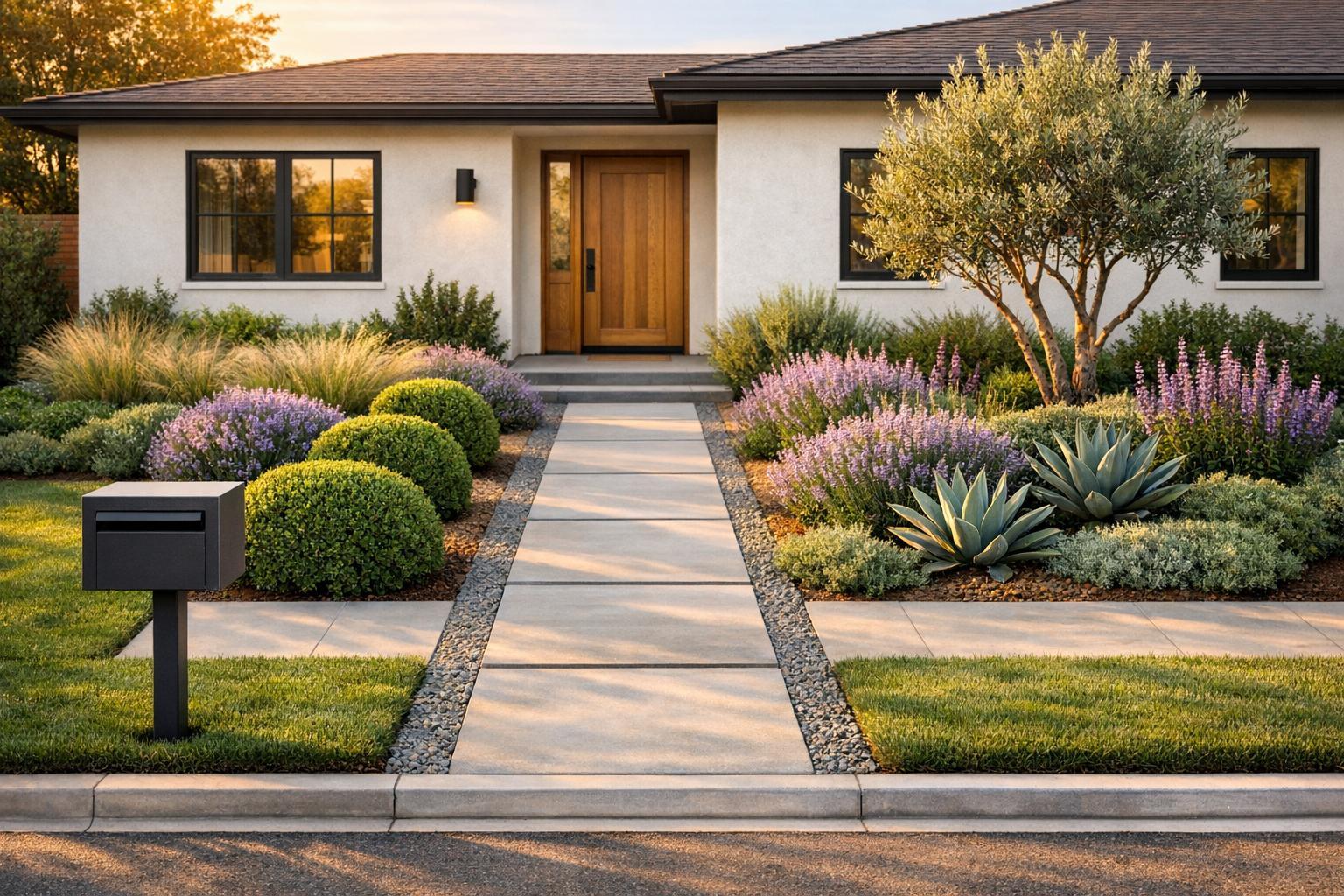
A well-designed front yard can boost your home's curb appeal and even increase its value by 10–15%. Whether you prefer sleek, modern layouts or lush, layered gardens, there’s a style to match your vision. The challenge? Visualizing how these ideas will look in your space. That’s where InstantInterior AI comes in - it lets you upload a photo of your yard and instantly generates realistic design concepts tailored to your home.
Here are six front yard styles to consider:
- Modern/Minimalist: Clean lines, ornamental grasses, and low-maintenance materials like concrete pavers.
- Cottage Garden: Overflowing layers of hydrangeas, lavender, and hardy perennials for a charming, cozy vibe.
- Low-Maintenance/Drought-Resistant: Gravel pathways, native plants, and water-saving techniques for eco-friendly designs.
- Mediterranean: Warm stonework, lavender borders, and drought-tolerant herbs for a relaxed, timeless look.
- Contemporary Curb Appeal: Bold geometric designs with sculptural plants and sleek hardscaping.
- Lush/Traditional: Layered plantings with hydrangeas, evergreens, and seasonal flowers for a classic feel.
With InstantInterior AI, you can see how these styles would look in your yard before making any changes. Upload a photo, explore various designs, and find the perfect fit - all for free.

6 Front Yard Landscape Design Styles Comparison Guide
EASY Low-Maintenance Front Yard Landscaping
sbb-itb-4214aae
1. Modern/Minimalist
Clean Lines
Modern front yards focus on simplicity and structure. Think straight walkways (36–48 inches wide), large gray concrete pavers, and bold, uncluttered planting beds. This minimalist approach creates a clean backdrop that highlights carefully chosen plants.
For plantings, go for ornamental grasses like Karl Foerster, compact evergreens such as boxwood, and low-growing groundcovers like sedum. Arrange them in odd-numbered groups - 3, 5, or 7 - for a balanced and natural look.
Enhance your home's exterior with horizontal wood fencing, black metal details, or Corten steel retaining walls. At night, warm LED lighting (2700–3000 K) can highlight architectural features beautifully. To keep everything neat, consider steel or aluminum edging, which costs about $1.50–$3.00 per linear foot. This edging creates crisp boundaries between planting beds and lawns, cutting down on trimming time.
Want to see how these ideas would look on your property? Tools like InstantInterior AI let you upload a photo of your front yard and generate a realistic modern design concept in just 60 seconds. You'll get a detailed plant list, material suggestions, and a clear visualization of how elements like large pavers and ornamental grasses can elevate your space - all tailored to your home, not a generic layout.
Modern designs are also practical. For example, replacing 300 square feet of lawn with creeping thyme groundcover can save around 120 hours of yearly maintenance. Pair that with a drip irrigation kit (DIY options range from $200–$400), and you’ve got a low-maintenance yard that looks amazing. With InstantInterior AI, you can see how these upgrades would look before making any changes, helping you create an effortlessly stylish front yard.
2. Cottage Garden
Layered Planting
Cottage gardens bring a charming, overflowing vibe to your front yard. The key to achieving this look lies in layering your plants: place tall varieties like hollyhocks and delphiniums in the back, use mid-height plants like hydrangeas and lavender for structure, and finish with low-growing options like catmint or hardy geranium to soften the edges.
"A real cottage garden is a complete world of heights and textures: tall plants for interest at height, mid-level anchoring plants that give structure, and low-growing plants that soften edges." - Jo Thompson
For a practical approach, try planting Little Lime hydrangeas 3–5 feet apart, leaving a 24–36 inch gap to ensure good airflow. Incorporate perennials such as coneflowers (Echinacea) and catmint (Nepeta) in clusters of three or five. This odd-number grouping adds a sense of balance without making the layout feel overly formal. If you're tackling a 20–30 foot garden bed yourself, expect to spend around $500–$1,200 on materials, with an additional $150–$300 if you want to include a Japanese maple as a focal point.
The trickiest part of a cottage garden is keeping it from looking chaotic. Using crisp steel edging - priced at $1.50–$3 per linear foot - can help define the space and give it a more polished appearance. To make the process even easier, InstantInterior AI offers a custom preview of how a cottage garden design would look in your yard. Upload a photo, and you'll see how plants like catmint and coneflowers could complement your walkway, while also accounting for the mature size of the plants - avoiding the dreaded "blob" effect.
Opt for hardy perennials like geraniums or low-growing coreopsis instead of annuals to reduce the need for replanting each year. Finish the look with a 2–3 inch layer of bark mulch to retain moisture and give the garden a neat finish. With a well-thought-out structure - and the help of InstantInterior AI - you can achieve that storybook cottage charm without the guesswork. Ready to explore another style? Let’s dive into low-maintenance options next.
3. Low-Maintenance/Drought-Resistant
Hardscaping with Native Anchors
The drought-resistant style blends practicality with eco-consciousness, offering a front yard design that’s both low-maintenance and water-efficient.
If you’re looking to cut back on watering and save on water bills, this approach is a smart choice. By incorporating hardscaping elements like gravel pathways and permeable pavers alongside native plants that thrive without additional watering once established, you can create a space that’s easy on your wallet and the environment. For instance, this type of yard can slash annual maintenance costs from $800–$1,200 to just $200–$400, while reducing the time spent on upkeep from nearly two hours weekly to a mere 15 minutes monthly. Replacing sections of your lawn with decorative gravel or river rock not only retains soil moisture but also helps suppress weeds.
For pathways, permeable pavers - ideally 36–48 inches wide - are a great option. They allow rainwater to seep into the ground, improving soil health and reducing erosion.
"Paths crafted from permeable pavers allow for efficient drainage, reducing erosion and enhancing soil health."
– California Landscape Development
Grouping plants by their water needs, a technique known as hydrozoning, is another effective strategy. Native shrubs can serve as focal points, while a 3–4 inch layer of mulch around your plants helps lock in moisture and keep weeds at bay.
For a 500 sq ft front yard, costs can range from $200–$1,500 for a DIY project to $1,500–$8,000+ if you opt for professional hardscaping with natural stone and upgraded lighting.
Curious how this style would look in your yard? Upload a photo to InstantInterior AI and see how gravel beds, native plants, and stone pathways enhance your home’s aesthetic. This tool tailors designs specifically to your yard, giving you a personalized preview in seconds - completely free. Check out even more ideas below!
4. Mediterranean
Sunlit Textures and Stonework
Mediterranean design brings a sense of warmth and charm with its terracotta tones, lavender borders, and stone pathways that create a classic and inviting entryway. This style works especially well in warm climates and pairs naturally with stucco homes, giving your front yard a relaxed, vacation-like feel.
Hardscaping plays a key role in both aesthetics and functionality. Stone retaining walls help manage slopes while adding visual depth, and gravel beds or decomposed granite can take the place of traditional turf. A 48–60 inch wide walkway, bordered with river rock, allows drought-tolerant herbs like rosemary and sage to spill gently over the edges, creating a soft, natural look. To maintain clean lines, permanent steel edging keeps gravel areas neat and prevents grass from encroaching.
The plant palette emphasizes drought-tolerant options that provide texture and interest all year long with minimal water use. Lavender, ornamental grasses, and native shrubs are arranged using hydrozoning - a method where plants are grouped based on their water needs. This ensures that vibrant, colorful plants frame your entrance while tougher varieties create a solid backdrop along the edges. To keep everything thriving efficiently, drip irrigation systems, which use 30–50% less water than traditional sprinklers, are an excellent choice.
For evening curb appeal, warm LED lighting (2700–3000 K) highlights the natural beauty of stone surfaces and silvery foliage. To complete the look, consider adding a vine-covered arbor or bold container plants near the entrance. These touches create an elegant transition from the street to your front door, elevating the overall feel of your home.
Curious about how Mediterranean design could transform your front yard? Upload a photo to InstantInterior AI and see personalized gravel beds, stone accents, and drought-friendly plantings tailored to your home’s unique features.
5. Contemporary Curb Appeal
Geometric Precision Meets Organic Texture
Contemporary curb appeal is all about combining clean lines, bold contrasts, and intentional design choices. Picture oversized concrete pavers paired with dark river rock or horizontal wood slats set against smooth stucco. Every element in this style works as an extension of modern architecture, creating a cohesive and striking first impression.
The hardscape is where geometry takes center stage. Straight pathways, sharp 90-degree angles, and rectangular shapes replace the softer curves seen in traditional designs. Large concrete step pads make a bold statement, while materials like black basalt or crushed granite add texture and depth. For pathways, a width of 36–48 inches ensures both functionality and a sleek, linear look.
When it comes to plants, the focus shifts from dense flowerbeds to minimalist, sculptural arrangements. Think of species like Agave, Japanese Maples, Blue Fescue, or Horsetail reeds, spaced intentionally to highlight their unique forms. A limited palette of greens and silvery tones keeps the design cohesive and visually interesting throughout the year.
Lighting ties everything together. Hidden LED strips under floating stairs or recessed ground lights can emphasize specific trees and textures without adding clutter. Warm LEDs (around 2,700–3,000 K) are perfect for accentuating architectural features and creating a welcoming glow in the evening.
This style transforms your front yard into a modern masterpiece. Curious about how this look could work for your home? With InstantInterior AI, you can explore how oversized pavers, sleek metal details, and sculptural greenery can be tailored to your unique space. Upload a photo and see how this bold, contemporary vision can elevate your home's curb appeal.
6. Lush/Traditional
Timeless Elegance Through Layered Abundance
If sleek, modern designs aren't your thing, a traditional front yard offers a classic, welcoming charm that feels warm and familiar. With InstantInterior AI, you can easily visualize this timeless look using a photo of your own yard.
Traditional front yards focus on layered plantings that create a sense of depth and permanence. Picture the quintessential American home with beds featuring panicle hydrangeas like 'Little Lime' or 'Bobo,' accented by pops of seasonal color from hardy geraniums or Cat's Pajamas nepeta. The trick is achieving a lush, abundant look without it feeling chaotic or overgrown.
Define your lawn's edges with monthly spade cuts or steel edging to keep everything neat. For the layered effect, arrange your plants in tiers: taller shrubs spaced about 3–5 feet apart in the back, followed by a border of low perennials or annuals (12–18 inches wide) in the front. To ensure your yard looks vibrant even in winter, mix in narrow evergreens like globe arborvitae or slender yew to provide structure when other plants lose their leaves.
For a 20–30 ft traditional planting bed, materials typically cost $500–$1,200 if you're doing the work yourself, plus $50–$150 per season for fresh annuals. Adding a focal point like a Japanese maple can range from $150–$300 or more, but it ties the entire design together beautifully. To keep everything thriving, apply 2–3 inches of mulch to help with weed control and root insulation. For evening ambiance, consider warm LED lighting (2,700–3,000 K) to highlight white blooms and bronze-toned foliage.
Want to see how hydrangeas, a Japanese maple, and layered perennials can transform your yard? Upload a photo to InstantInterior AI for a custom preview tailored to your space.
Conclusion: Find Your Style and Start Designing
Your front yard is like a personal billboard - it’s what everyone notices first. A well-designed landscape doesn’t just look great; it can boost your property’s value by 10–15% and even help your home sell faster compared to similar properties.
The hardest part? Picking a style. Whether you’re drawn to sleek modern designs, cozy cottage vibes, or low-maintenance options, it’s tough to decide when every style has its charm. But seeing those ideas come to life on your own property can make the decision much easier.
That’s where InstantInterior AI can make a difference. With just a photo, you can instantly visualize your front yard in any style - whether it’s clean gravel layouts, Mediterranean-inspired olive trees, or vibrant hydrangea borders - all in about 30 seconds.
You can compare a variety of styles side by side, from contemporary elegance to rustic cottage charm or even a desert-friendly xeriscape. Share your favorite designs with family, get feedback, or show them to a contractor for an estimate before committing to any changes.
Curious to see your front yard reimagined? Upload a photo to InstantInterior AI, choose the style that feels right, and watch your curb appeal come to life. Start exploring for free and discover your perfect design.
FAQs
How do I pick the right front yard style for my home?
When deciding on a front yard style, think about what matches your personal preferences, complements your home's architecture, and aligns with the amount of upkeep you're willing to handle.
- Low-Maintenance Choices: If you'd rather not spend too much time on yard work, consider using drought-resistant or native plants. These options typically require less watering and care.
- Modern Aesthetics: For a sleek, contemporary vibe, combine layered plants with clean hardscaping elements like stone paths or minimalist planters.
- Visualizing Your Options: Tools that use AI to create visual examples of your yard can make it easier to see which style works best for your space.
Whatever you choose, aim for a design that feels right for you and fits naturally with your home.
What should I measure before uploading a yard photo to InstantInterior AI?
Start by taking accurate measurements of your yard, including its width, length, and any standout features like pathways or structures. These details help ensure the photo you upload to InstantInterior AI represents your space accurately, leading to better design suggestions.
What’s the cheapest change that boosts curb appeal fast?
Planting in groups of three is a budget-friendly way to instantly boost your home's curb appeal. This method creates a visually pleasing and harmonious look, and the best part? You can do it by simply rearranging or reusing plants already in your yard.