
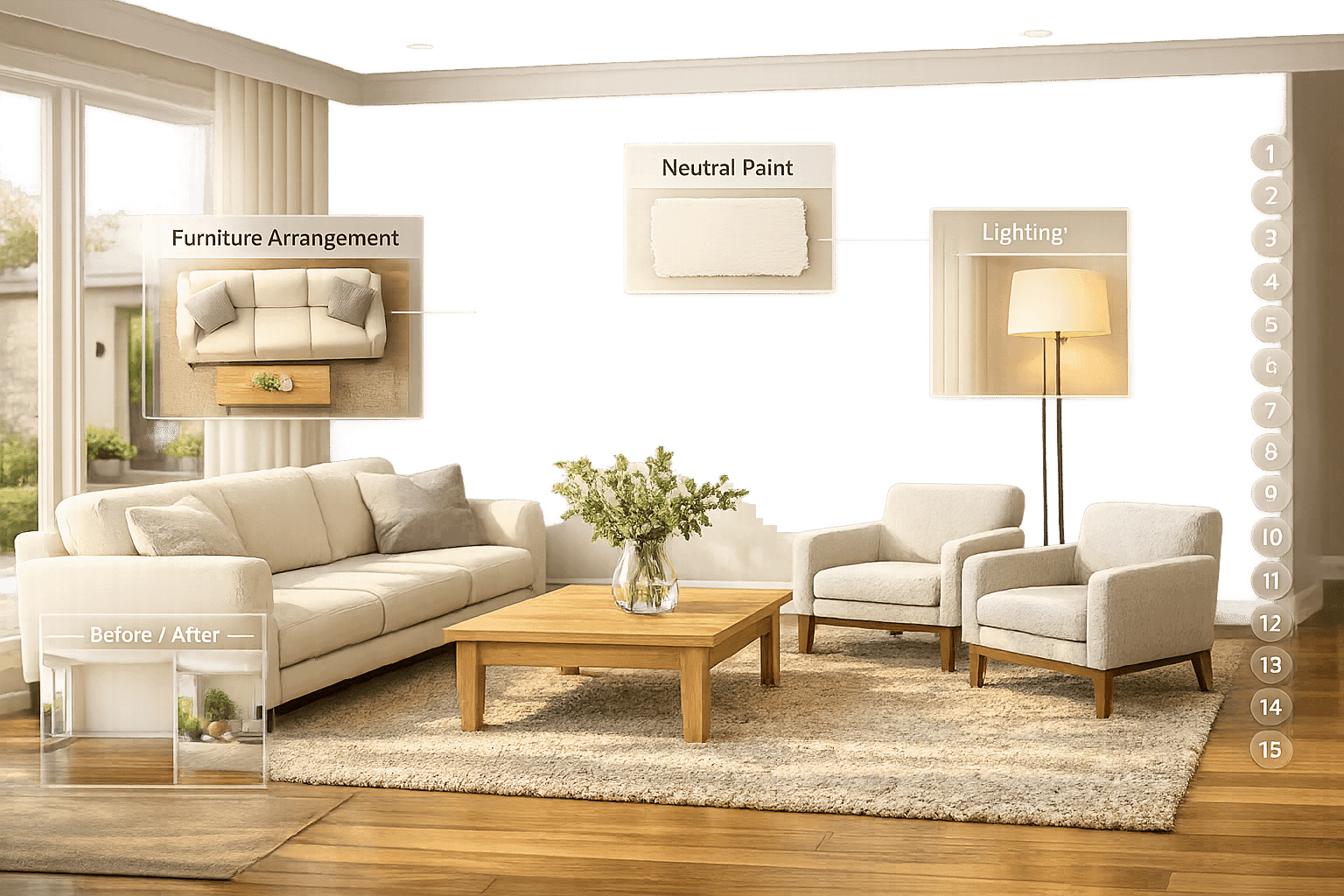
Staging a home is essential to selling faster and at a better price. With buyers spending 60% of their online search time on photos and staged homes selling 73% faster, preparation matters. Here's a quick rundown of key steps:
- Declutter and Depersonalize: Clear 30–50% of items, remove personal photos, and organize spaces like closets.
- Deep Clean: Focus on kitchens, bathrooms, windows, and floors. Professional services can help.
- Fix and Refresh: Repair minor issues, apply neutral paint (e.g., "greige"), and update hardware.
- Furniture Placement: Arrange for flow and space, avoiding overcrowding.
- Lighting: Layer ambient, task, and accent lights; use warm-white LEDs.
- Neutral Colors: Stick to soft whites, grays, or beige for walls and decor.
- Add Textures: Use rugs, throws, and pillows for a cozy look.
- Style Bathrooms: Keep them spotless with spa-like touches.
- Kitchen Appeal: Clear counters, add subtle accents, and clean thoroughly.
- Curb Appeal: Tidy the exterior, paint the door, and enhance entry areas.
- Virtual Staging: Use AI tools like InstantInterior for cost-effective, high-quality photos.
- Final Touches: Add flowers and subtle scents to create a welcoming vibe.
Staging blends preparation, cleaning, and design to help buyers envision themselves in the home. Homes with standout staging and visuals can sell faster and for up to 10% more.

Real Estate Staging Statistics: Impact on Home Sales Speed and Price
EXPERT STAGING TIPS: Prep Your Home to Sell for Top Dollar
sbb-itb-4214aae
1. Remove Personal Items and Clear Clutter
The first step in preparing your home for sale is removing personal items and clearing clutter. This helps create a neutral space where potential buyers can imagine their own lives unfolding. Items like family photos, vacation souvenirs, and personal collections can act as an "invisible barrier". When buyers see reminders of someone else's life, it becomes harder for them to picture their own belongings in the space.
These adjustments not only reduce distractions but also make the home feel more appealing.
"Home buyers aren't interested in buying your life. They want to envision their own." – Stephanie Engel, Strategic Interior Design Advisor, Real Estate Bees
Decluttering and depersonalizing can boost a home's perceived value by 5% to 10% and help it sell 6% to 16% faster. Aim to clear 30% to 50% of visible items, replace personal photos with neutral artwork, and keep decor minimal - think one or two simple pieces like a vase or a bowl of fresh fruit.
Closets are especially important since buyers will inspect every storage area. Use the 50% rule, leaving closets half full to give the impression of abundant storage space. Store out-of-season clothing, switch mismatched hangers for uniform ones in neutral tones, and organize clothes by color, with everything facing the same way. Overstuffed closets suggest a lack of storage, while half-empty ones create a sense of "breathing room".
Bulky furniture can make rooms feel cramped, so consider removing larger pieces to improve flow and highlight the actual square footage. In closets, clear the floors to expose baseboards, and remove items like boxes, shoes, and storage bins that can make the space feel smaller.
Finally, secure valuables, prescription medications, and sensitive documents before showings to protect your privacy. Hide pet-related items such as litter boxes and food dishes, as these may raise concerns about cleanliness for buyers who don’t own pets. By taking these steps, you can help potential buyers focus on the home's possibilities rather than its current occupants.
2. Clean Every Surface Thoroughly
A spotless home sends a clear message to potential buyers: it shows the property has been well cared for and provides a blank slate for them to imagine their future. On the other hand, dirt and grime can immediately signal neglect.
"A messy, dirty home is an immediate red flag to buyers. Not only does it make the home less appealing, but it also gives buyers the impression that the home hasn't been well cared for." – MHM Professional Staging
Pay extra attention to the kitchen and bathrooms. These are key areas for buyers, influencing 78% and 73% of their decisions, respectively. Scrubbing grout, polishing faucets, and thoroughly cleaning appliances go a long way. For stubborn grout stains, try a mix of baking soda and vinegar, or consider professional color sealing for a like-new finish.
Windows are just as important. Clean them inside and out, including the tracks and sills, to let in as much natural light as possible. Bright, well-lit spaces feel larger and more inviting. Start cleaning from the ceiling downward to prevent dust from resettling. Don't forget baseboards, door frames, and walls - removing scuff marks and cobwebs gives the home a polished look.
Once you've tackled these areas, consider hiring a professional cleaning service to give the entire home a deep clean. For a 2,000-square-foot home, this typically costs $240 to $500, while carpet cleaning ranges from $123 to $241. It's an investment worth making: 83% of buyers' agents say a clean, staged home helps buyers visualize themselves living there. Plus, staged homes spend an average of 23 days on the market compared to 184 days for those left unstaged. A clean home sets the stage for arranging furniture and decor in the next step.
3. Fix Small Issues and Apply Fresh Paint
Once you’ve decluttered and cleaned, it’s time to tackle those minor maintenance problems. Small issues like a leaky faucet, a squeaky door, or chipped paint can send a message to buyers that the home hasn’t been properly maintained. These seemingly minor flaws can make buyers question what other problems might be lurking - and they may use them as bargaining chips to negotiate a lower price.
Start by walking through your home and making a list of repairs. Tighten loose doorknobs, fix running toilets, replace torn window screens, and patch up any drywall cracks. Updating old hardware with modern finishes - like polished nickel, matte black, or antique brass - can instantly give your home a more contemporary and stylish feel. Real estate experts suggest budgeting around $10,000 for pre-listing repairs, with interior painting often being the biggest investment. These small updates not only improve your home’s appearance but also create a polished, updated look that appeals to buyers.
"Older wood tones date a space fast; a fresh coat of white, warm gray, or a soft neutral instantly feels open and current. Finish the look with new hardware - polished nickel, matte black, or antique brass all work and photograph beautifully."
– Amanda Valente, Co-founder and COO, Renovation Sells
Painting is one of the most cost-effective ways to refresh your home. Stick to light, neutral shades like soft whites, warm grays, or "greige" (a mix of gray and beige) to make spaces feel larger and brighter. Avoid stark white, which can feel cold in photos, and instead opt for warm off-whites like Sherwin-Williams' Alabaster or Benjamin Moore's White Dove. Use eggshell or satin finishes for walls to hide imperfections and semi-gloss for trim to create a sharp, professional contrast. If you’re working with a limited budget, focus on high-impact areas such as the entryway, living room, kitchen, and primary bedroom.
Another simple upgrade is swapping out light bulbs for warm-white LEDs (2700K to 3000K) to create a cohesive and inviting atmosphere. Refreshing yellowed or cracked caulking around sinks and tubs also gives a cleaner, well-kept look. To ensure there are no surprises, consider a pre-listing inspection, which typically costs between $300 and $500. This can help you address hidden problems before buyers find them during their own inspection. These finishing touches make your home feel move-in ready and give buyers confidence in their purchase.
4. Position Furniture for Better Movement
Once you've tackled repairs and given your walls a fresh coat of paint, it's time to think about furniture placement. How you arrange furniture can completely change the feel of a home, making it seem more spacious and functional to potential buyers. Professional stagers suggest that most homes need to remove around 50% of their belongings, including extra furniture, to make the space more appealing. Large items like oversized sectionals, extra recliners, or additional sofas can shrink a room's perceived size by up to 30%. Rearranging with purpose helps create a welcoming and open atmosphere.
Aim to create clear walkways with 30–36 inches of space for easy movement. Between furniture pieces, leave 18–24 inches of clearance. In living rooms, resist the urge to push furniture against the walls. Instead, float the sofa about 12–18 inches away from the wall to give the room a more open and stylish look.
"The flow pattern needs to move through the living/bedroom to the focal point. You do not want buyers to stand at the door; your work needs to entice them on a journey into the room."
– Spangle Staging
Pay attention to proportions when arranging your furniture. For example, the sofa should span roughly two-thirds of the wall it’s placed against, while the coffee table should be about two-thirds the length of the sofa. Keep the coffee table positioned 14–18 inches from the sofa for both comfort and aesthetics. In bedrooms, place the bed against the longest wall, ideally opposite the door, and ensure there’s access from both sides. In dining rooms, remove extra table leaves and maintain 36–42 inches between the table edge and the walls.
For seating arrangements, consider a U-shape or circular layout with 4–8 feet between chairs or sofas to encourage conversation. This setup helps buyers imagine themselves using the space for gatherings. In larger or open-concept areas, use rugs and furniture groupings to define specific zones. When using rugs, make sure all furniture legs - or at least the front ones - sit on the rug to create a cohesive look.
5. Brighten Rooms with Better Lighting
Lighting is one of the most effective ways to change how potential buyers feel about your home. Dim or outdated lighting can make even spacious rooms feel small and unwelcoming. The key is to layer different types of light to add warmth, depth, and character to each space. When paired with a thoughtful layout, good lighting can make a room feel functional and inviting.
Professional stagers often use the three-layer rule: blending ambient lighting (like overhead fixtures), task lighting (focused light for activities such as reading or cooking), and accent lighting (which highlights features like artwork or architectural details). Ideally, a room should have light sources at three different heights: ceiling fixtures for general illumination, sconces or floor lamps at eye level, and table lamps or candles closer to the surface level. This approach reduces harsh shadows and ensures every corner feels cozy and usable.
The color temperature of your bulbs is just as important as the brightness. For living rooms, bedrooms, and dining areas, use bulbs in the 2,700K to 3,000K range, often labeled as "Warm White" or "Soft White", to create a relaxed, inviting atmosphere. Avoid "Daylight" bulbs (5,000K or higher) in these spaces, as their bluish tone can feel cold and clinical. In kitchens and bathrooms, slightly cooler bulbs around 4,000K work well for task areas like countertops and vanities, but keep spaces like dining nooks and tubs lit with warmer tones. Always ensure that all bulbs in a single fixture match in color temperature to avoid giving the impression of neglect.
Natural light is another crucial element. Clean your windows thoroughly - inside and out - since dusty panes can dull the light. Use mirrors strategically by placing them opposite windows to reflect light around the room. Replace heavy drapes with sheer curtains, and hang them so they extend 12 inches beyond the window frame to let in as much light as possible while maintaining a sense of openness.
"Lighting directly impacts how buyers perceive a home's size, cleanliness, and overall vibe. A poorly lit room can feel small, dated, and gloomy, regardless of its actual dimensions."
– aiStager
Take time to address any dark spots in your home. Conduct a "shadow audit" to find areas that feel dim or unused. Add a floor lamp or table lamp to brighten these spaces and make them feel more inviting. Dimmer switches are also a smart addition, allowing you to adjust lighting levels throughout the day to suit different moods or purposes. This flexibility can help buyers imagine transitioning a room from a functional workspace to a cozy retreat.
Good lighting doesn’t just make a home look better - it can also boost buyer interest. Homes photographed with optimal lighting conditions can receive up to 40% more inquiries. By refining your lighting strategy, you can make a powerful impression on potential buyers.
6. Paint Walls in Neutral Tones
Once you've optimized the space and lighting, the next step is creating a neutral backdrop to bring everything together. Neutral wall colors help buyers focus on the home's features and imagine their own style in the space.
Bright or bold colors can be distracting and make it harder for buyers to connect emotionally with the property. In fact, 98% of top real estate agents agree that neutral walls are more appealing to buyers than bold tones.
Some of the most recommended shades include beige (78%), white (30%), and gray (15%). A trending favorite is "greige", a mix of gray and beige, which combines the modern feel of gray with the warmth of beige. Popular options like Sherwin-Williams' Agreeable Gray or Benjamin Moore's White Dove are great starting points. Focus on painting high-traffic areas such as the entryway, living room, kitchen, and primary bedroom to make the biggest impact.
"You don't want it too spicy, and you don't want it too bland. You want to make it a neutral palette with subtle warmth to appeal broadly." – Christie Cannon, Real Estate Agent
When choosing finishes, consider the room's purpose. Matte or eggshell finishes work well in living rooms and bedrooms because they hide imperfections. For kitchens and bathrooms, satin or semi-gloss finishes are better as they resist moisture and are easier to clean. Always test paint swatches in the room's natural lighting, as colors can look different than they do in the store.
To avoid a dull look, incorporate subtle accents like throw pillows, a colorful vase, or fresh flowers. Stick to the "Rule of Three" for decor - limit items on surfaces to three pieces to maintain a clean, open feel.
7. Add Soft Textures and Simple Decor
Once you've set up neutral walls, it's time to bring the space to life with soft textures and straightforward decor. These elements can transform a space, making it feel cozy and approachable without overwhelming the clean, modern aesthetic. Think of it as adding layers of comfort that complement your neutral backdrop. Throw blankets and decorative pillows, for example, can soften the overall vibe of a room, turning it from stark to welcoming.
Start with an 8x10 neutral area rug to anchor your furniture and clearly define the space. For the sofa, a neatly folded throw blanket draped over one arm paired with a few coordinating pillows can add just the right touch. In bedrooms, opt for hotel-inspired bedding - crisp whites or soft grays - to create a serene, retreat-like atmosphere. These small but impactful details can help potential buyers envision the space as their own cozy haven.
A helpful guideline to follow is the 60-30-10 color rule:
- 60% dominant neutral tones (walls and rugs)
- 30% secondary neutrals (furniture)
- 10% accent colors (pillows, throws, or a statement vase)
Using this rule ensures a balanced look that ties all the elements together. Incorporate materials like linen, natural fibers, or velvet to add subtle depth and texture to the room.
"Surfaces - such as coffee tables, fireplace mantels, or shelves - should have no more than three selected items." – Stephanie Engel, Strategic Interior Design Advisor, Real Estate Bees
When it comes to surfaces, less is more. On coffee tables or mantels, stick to groups of three items for a visually balanced display - like a stack of books, a small plant, and a candle. In kitchens and bathrooms, keep counters clear, showcasing only one or two high-quality items for a clean and spacious look. By keeping visible areas uncluttered, you create a sense of openness and elegance.
8. Style Bathrooms for a Clean, Relaxing Look
Bathrooms play a crucial role in shaping a buyer's impression, so they need to feel spotless and serene. Start with a thorough scrub-down - make every surface gleam, from grout lines to fixtures, mirrors, and glass shower doors. Clear all personal items like toothbrushes, razors, soaps, and medications off counters and out of sight. Even practical items like garbage cans, toilet brushes, and plungers should be tucked away in cabinets before showings.
"A bathroom can never be too clean." – Krisztina Bell, No Vacancy Home Staging
Once the space is sparkling, focus on creating a polished, spa-like vibe. Borrow from the look of a luxury hotel: neatly fold plush white towels, hang a crisp white waffle-weave shower curtain, and make sure the toilet lid stays closed for a clean, put-together feel. Swap out dim or mismatched bulbs for warm LED lighting (3000K–3500K) to create a soft, welcoming glow.
Keep the decor simple and elegant. Group items in threes for a balanced, minimal look - think a candle, a small plant, and a decorative tray. Adding a small orchid or fern can bring a touch of freshness to the room. For a quick modern update, consider replacing hardware with matte black, brushed nickel, or polished chrome finishes. This upgrade is often budget-friendly (under $800) and can make a big difference. Plus, minor bathroom remodels typically offer an 80% return on investment.
"When staging a bathroom, think spa, rather than personal style." – Kevin Vitali, REALTOR
To finish, remove bath mats to make the floor look larger and uninterrupted. The goal is to help buyers imagine a spacious, relaxing retreat that feels like their own private oasis. For more inspiration, see these virtual staging before and after examples that showcase similar room transformations.
9. Clear Kitchen Counters and Show Space
Once you've tidied up the common areas, it's time to turn your attention to the kitchen - often called the heart of the home. With 76% of home buying decisions influenced by the kitchen, showcasing its space and functionality is crucial. Start by completely clearing off the countertops. This not only makes the area look more spacious but also allows potential buyers to imagine how they could use the space.
"You want the counters as bare as possible because you want to emphasize how much counter space you have in your kitchen." – Tanya Endicott, Real Estate Agent
Next, tackle the refrigerator. Remove magnets, photos, and children's artwork to create a clean slate that helps buyers picture their own lives in the home. For a quick upgrade, swap out old cabinet hardware for modern matte black or brushed nickel pulls - an affordable change at just $1 per fixture - that can give cabinets a fresh, updated look. In 2022, sellers saw an average 71% return on investment for minor kitchen remodels.
To add warmth and character without clutter, include 2–5 carefully chosen accents. Think of a wooden cutting board paired with a cookbook, a bowl of vibrant lemons or limes, or sleek, matching white canisters for pantry items. These small touches, costing between $5 and $40, can help buyers envision a welcoming, functional kitchen. For extra impact, consider installing battery-powered LED strips under the cabinets (priced at $30–$100) to brighten the workspace and eliminate shadows.
Hide everyday items like trash cans and pet bowls in the pantry or laundry room during showings to keep the space feeling polished. Make sure all surfaces are spotless - clean backsplash grout lines and use wood oil to make cabinets gleam. A well-staged kitchen can boost your home's value by 4% to 7%, and staged homes sell 88% faster than those left unstaged.
10. Improve Curb Appeal and Entry Areas
Once you've perfected your interiors, it's time to focus on the exterior. First impressions matter - buyers often form an opinion about a home in just 15 seconds of seeing it from the outside. Your home's curb appeal plays a crucial role in setting the tone, with the front door acting as the "headline" that introduces the property.
"Think of your front door as your headline. It's one of the first details that draws the eye, and sets the stage for the story your home is about to tell." – Charlie Lankston, Executive Editor of Realtor.com
Start by giving the exterior a thorough cleaning. Pressure wash the siding, driveway, and walkways to remove grime and mildew. Keep the lawn looking sharp by mowing, edging, and trimming hedges, and reseed any bare patches. Adding fresh mulch to garden beds not only enhances the landscaping but also signals that the property has been well cared for. These updates can pay off - yard improvements often add at least $20,000 to a home's value at resale.
Next, turn your attention to the front door. A fresh coat of paint in a bold yet neutral color, like deep navy, forest green, or rich black, can make a striking statement. If the door is beyond repair, consider replacing it with a steel door, which can yield a 102% return on investment. Small upgrades like new hardware - matching finishes for house numbers, doorbells, mailboxes, and handles - can also make a big difference. For added charm, place matching planters with seasonal flowers on either side of the entrance for a balanced, welcoming look.
Lighting is another key element, especially for evening viewings. Solar-powered LED lights along walkways add both safety and style, while a statement fixture above the front door highlights the home's architecture.
Finally, stage the porch to showcase it as a usable space. A bench, bistro set, or porch swing can help buyers imagine themselves relaxing there. Pair these with a clean welcome mat for a polished finishing touch. Together, these curb appeal upgrades work in harmony with your interior staging, creating a seamless and inviting experience for potential buyers.
11. Use InstantInterior AI for Virtual Staging

Virtual staging takes the concept of physical staging and brings it to the digital world, making it a game-changer for online property listings. Considering that every homebuyer now starts their search online, this tool ensures your listings stand out. InstantInterior AI simplifies the process by transforming empty or cluttered rooms into stunning, photorealistic spaces in just 30 seconds.
Here’s how it works: upload a high-quality photo (at least 2,000px), choose the room type and preferred design style - like Modern, Scandinavian, Industrial, or Coastal - and let the AI do the heavy lifting. It analyzes the room's layout, features, and natural lighting, then places scaled furniture complete with realistic shadows and reflections. The result? A virtual space that looks like it was staged by a professional designer.
What makes this tool even better is its flexibility. The built-in editor allows you to adjust furniture placement, swap out items, or explore different styles until the room perfectly fits your target audience's preferences. You can even create multiple versions of the same room to test which style generates the most interest on listing platforms. And the stats back it up: staged photos can boost online views by 61% and help properties sell 73% faster than vacant ones.
One real estate agent shared their experience:
"I am receiving a lot more calls for viewings of properties that previously attracted no interest, all thanks to overcoming challenges with poor decoration or condition of certain rooms." – David, Real Estate Agent
Every render includes full commercial rights, so you’re free to use them across MLS listings, social media platforms, printed brochures, or even billboards without limitations. Just make sure to add a note like "(virtually staged)" to keep everything transparent for potential buyers.
And the cost? Plans start at just $13.50 per month for 100 renders - a fraction of the $1,700 to $4,500+ monthly price tag for traditional staging. It’s an affordable, efficient way to elevate your listings and capture buyers’ attention.
12. Add Fresh Flowers and Pleasant Scents
The finishing touch to your home staging checklist? Creating a welcoming sensory experience. A home that smells fresh and looks vibrant instantly appeals to buyers. Fresh flowers and subtle scents can evoke emotions and memories, helping potential buyers picture themselves living in the space. The trick is to keep it simple and natural, ensuring the atmosphere feels inviting, not overwhelming.
When it comes to flowers, choose options that last. Orchids can stay fresh for 4 to 6 weeks, while carnations hold up for 7 to 14 days. If you're on a budget, grocery stores like Trader Joe's or Walmart offer fresh arrangements for as little as $5 to $7. Place a vase of tulips or hydrangeas in the entryway, a small orchid in the bathroom for a spa-like vibe, or a bowl of bright lemons in the kitchen to add a cheerful pop of color.
"Using fresh flowers to stage your home... will add a touch of luxury and life to your home staging." – Karen Highland, Master Gardener and Real Estate Professional
For scents, stick with light, natural fragrances like citrus, vanilla, or eucalyptus. These convey cleanliness without feeling artificial. A simple trick? Simmer citrus peels and cinnamon sticks on the stove for 30 minutes before a showing, or place a few drops of essential oil on cotton balls and tuck them into closets.
"The goal is for buyers to walk in and think the home simply smells clean." – Richard Haddad, Executive Editor at HomeLight
Avoid using overpowering fragrances. Instead, try reed diffusers or fragrant plants like rosemary in the kitchen and lavender on bedroom windowsills. To keep flowers looking fresh, change the water daily and trim stems regularly. This prevents wilting blooms from leaving a negative impression. These small, natural details not only enhance the overall look but also signal that the home has been well cared for, creating a warm and inviting atmosphere buyers will love.
Conclusion
Staging isn’t just about decorating; it’s about creating an emotional connection that turns interest into offers. The 12 elements in this checklist work together to address a crucial challenge: 80% of buyers struggle to visualize potential in empty or poorly decorated spaces. By incorporating steps like decluttering, adding a fresh coat of paint, arranging furniture strategically, and finishing with details like fresh flowers, you help buyers picture themselves living in the home.
These efforts pay off. Staged homes sell much faster - dropping average time on the market from 130 days to just 35 days. They also tend to sell for more, with price increases ranging from 1% to 10%. And since 97% of buyers begin their search online, where they spend 60% of their time looking at listing photos, high-quality visuals are essential for grabbing attention. This checklist blends practical staging techniques with cutting-edge AI tools to amplify your property’s appeal.
One standout tool is InstantInterior AI, which transforms staging by generating photorealistic designs in seconds. For as little as $0.26 to $50 per image, compared to the $1,500 to $5,000+ price tag of traditional staging, you can create stunning visuals. The platform uses room geometry and lighting analysis to place furniture with precision, letting you experiment with styles like Modern, Scandinavian, or Transitional to match buyer preferences. With plans starting at $13.50 per month for 100 renders, it’s an affordable option that delivers a return on investment ranging from 500% to 3,600%.
To maximize impact, focus on the "big four" rooms: the living room, kitchen, primary bedroom, and dining room. These rooms heavily influence buyer decisions. Pairing thoughtful physical staging with InstantInterior AI’s virtual designs ensures your property stands out in a crowded market. This hybrid approach can boost listing views by 61% and inquiries by 31% in the first week. In today’s competitive landscape, this checklist could be the key to turning a slow-moving listing into a quick success story.
FAQs
What rooms should I stage first?
When preparing a home for sale, prioritize staging the living room, kitchen, and primary bedrooms. These spaces play a major role in helping potential buyers envision their life in the home, often shaping their overall impression of the property.
How much should I budget for staging?
Staging expenses can differ depending on the approach you choose. Traditional staging often costs between $1,500 and $5,000 or more, influenced by the size of the property and the extent of the staging required. On the other hand, virtual staging is generally a lower-cost option, with prices ranging from $50 to $300 per image or room. The final cost will depend on factors such as the size of your property, the expectations of your market, and whether you opt for physical or virtual staging.
Is virtual staging allowed on MLS listings?
Yes, you can use virtual staging for MLS listings, but it must be clearly disclosed and accurately labeled. To maintain transparency and follow MLS guidelines, you should also include the original, unedited images alongside the virtually staged ones.